
Have you ever noticed how the size of the container you choose can significantly affect shipping costs? The right size helps reduce the cargo's weight and keeps it from shifting while it's being shipped. This reduces the risk of damage and prevents you from paying for space you don't need.
It's important to pick the right container size, whether you're buying or renting. First, find out how big the container is and see if it fits your cargo and the way you need to load it. This makes shipping faster and cheaper.
Do you want to know how much a 20-foot container can hold? This article provides the exact dimensions and capacities of different 20-foot container types. This will help you better understand their weight and space limits and make more informed shipping decisions.
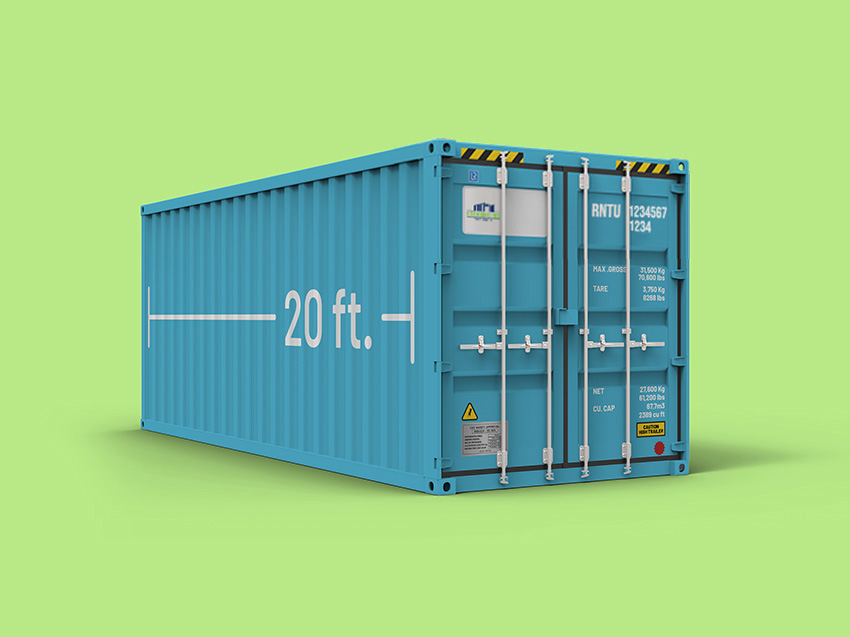
How Much Can You Really Fit Inside a 20‑ft Container?
A standard 20-foot container holds about 33 cubic meters inside. Its maximum payload is usually between 26,000 and 28,000 kg, depending on the container’s tare weight and the shipping line’s rules. In practice, the container’s internal volume is often the main limiting factor, so it is almost never filled to capacity.
Usually, a 20-foot container fits 11 Euro pallets (1.20 m × 0.80 m) or 9 to 10 US standard pallets (40 × 48 inches). The exact number depends on how the pallets are arranged and the height of the cargo.
For cargo that's not on pallets or comes in odd shapes, figuring out its volume (CBM) and weight ahead of time is essential. This information is key to making the most of container space and avoiding overloading.
Common Uses for 20-ft Shipping Containers
The 20ft shipping container is extremely versatile. It’s not just for ocean freight, it’s used in many industries for storage, transport, and construction.
- Shipping general cargo over sea, road, or rail
- Portable storage for construction sites and events
- Modular buildings like pop-up shops, kiosks, and site offices
- Temporary shelters in emergency or disaster zones
- Equipment storage in mining, oil & gas, or agricultural fields
- Container homes or creative upcycled spaces
Whether for industrial cargo or innovative housing, the 20 foot container gets the job done.
Reasons to choose a 20ft shipping container
You can consider the following reasons to make a smart choice for your storage or loading needs:
- Storage space: 20ft containers have plenty of space to store and load various items. The best part is that you can customize it by adding stackable plates to use the space efficiently.
- Easy to move and use: Such containers are designed for easy transportation, as you can move them anywhere. They are best for domestic and international trade by trains or container ships, easily routed via crane.
- Keeps things safe: Container manufacturers ensure containers can load items through sturdy lock mechanisms. Additionally, the tamper-proof features will make handling valuable assets easier.
- Saves money: Compared to 40-foot containers, these standard containers are cost-effective for businesses. They are good for your transportation needs if you want them for the long run.
- Last a long time: These containers are made with water-proof steel, which is durable and robust, withstanding any weather or environmental condition. Thus, they can provide a protected space for safely handling goods.
Types of 20ft Containers
Not all 20ft containers are built the same. Depending on what you’re shipping or storing, there are different models available.
| Container Type | Description | Key Features | Best For | Additional Info |
|---|---|---|---|---|
| 20ft Dry Container | The most common and widely available version. | Fully enclosed and sealed, water- and wind-tight | General cargo (boxes, bags, barrels, etc.) | Low maintenance, easy to find |
| 20ft Reefer Container | A temperature-controlled unit for perishable goods. | Built-in refrigeration unit, requires power supply | Food, medicine, chemicals | Higher rental and handling costs |
| Open-Top & Flat Rack Containers | For oversized or heavy-duty cargo. | Open-top: loaded from the top using cranes; Flat rack: no side walls | Project cargo, machinery, vehicles, pipes | Used when cargo doesn’t fit within standard box sizes |
Each of these types falls under the broader category of 20ft container specifications, the choice depends on your cargo and how it needs to be handled.
Factors Influencing 20 ft Container Shipping Costs
When it comes to 20 ft container shipping, several key factors can influence the overall cost. Understanding these can help you make smarter decisions and optimize your shipping budget.
Shipping Route
The route your container takes plays a big role in determining the cost. Common routes, like from Shanghai to Los Angeles, tend to be less expensive because of the high volume of shipments. Less common routes might be pricier due to fewer options and less frequent service.
Supply and Demand
Shipping costs are also affected by basic economics. During peak seasons, like around the Chinese New Year, demand for shipping containers can skyrocket. This often leads to higher rates. Conversely, during slower periods, prices might drop.
Interesting Fact: According to industry data, spot rates from China to the U.S. West Coast have been known to nearly triple compared to the previous year during high-demand periods.
Container Size
While we’re focusing on 20 ft containers, it’s important to note that size can also impact costs. Larger containers, like 40 ft ones, often come with higher shipping fees due to their increased capacity. However, in times of equipment shortages, smaller containers might be in higher demand, thus affecting their cost as well.
How Much Does 20 ft Container Shipping Cost?
When it comes to 20 ft container shipping, understanding the costs involved is essential for planning and budgeting. Let’s break down what you need to know.
Cost Range
The cost of shipping a 20 ft container can vary widely depending on several factors. While specific prices can fluctuate, industry data suggests that shipping from major ports like Shanghai to Los Angeles tends to be more economical due to the volume of shipments. However, routes that are less traveled might see higher costs due to fewer shipping options and less frequent service.
International Shipping
International shipping involves additional considerations. Customs fees, tariffs, and port charges can add to the overall cost. For instance, shipping a container to the United States from China can be influenced by geopolitical factors and trade agreements, which may affect pricing.
Interesting Fact: During peak seasons, such as the lead-up to the Chinese New Year, shipping rates can surge significantly. It’s not uncommon for spot rates to nearly triple during these high-demand periods.
Cost Calculator
To get a better grasp of what you might pay, using a cost calculator can be very helpful. These tools take into account the distance, route, and additional services you might require, providing a more accurate estimate. Many companies offer free online calculators that can give you a quick snapshot of expected costs.
Conclusion
When choosing a 20-foot container, consider these three factors: how much weight it can hold, the type of cargo (e.g., density, fragility, or danger), and the amount of space inside. Checking these things helps keep your cargo safe, ensures you're following the rules, and improves your logistics planning. Adding these items to your budget also helps you get a better idea of how much shipping will cost and avoid unexpected costs.
FAQ's
How much does it cost to ship a 20ft container?
The cost to ship a 20-foot container to the United States usually ranges from $750 to $3,000, depending on the route. Prices can also change based on when you book and current fuel costs.
How much weight is allowed in a 20 feet container?
A 20-foot container can hold up to 24,000 kilograms, with the container itself weighing 2,200 kilograms. This means you can load up to 21,800 kilograms of cargo. If you are shipping smaller loads, a 20-foot container is usually the most cost-effective option.
What Influences the Prices of Shipping Containers?
Shipping prices for a 20 ft container are influenced by several key factors:
- Cargo Form: Different types of goods, like fragile items or hazardous materials, may incur additional costs.
- Transport Mode: Sea transport is generally more cost-effective than air, though slower. Road transport is often used for shorter distances.
- Distance: Longer distances naturally increase shipping costs, especially for international routes.
- Supply and Demand: As demand for containers rises, prices can increase, reflecting the market’s current state.