
Moving goods from one location to another may sound straightforward, but the process can become more complicated when shipments need to travel long distances, cross borders, or move between different transportation networks. Businesses may need to consider transportation costs, delivery schedules, cargo safety, and the availability of trucks or rail services.
This is where intermodal transportation can play an important role.
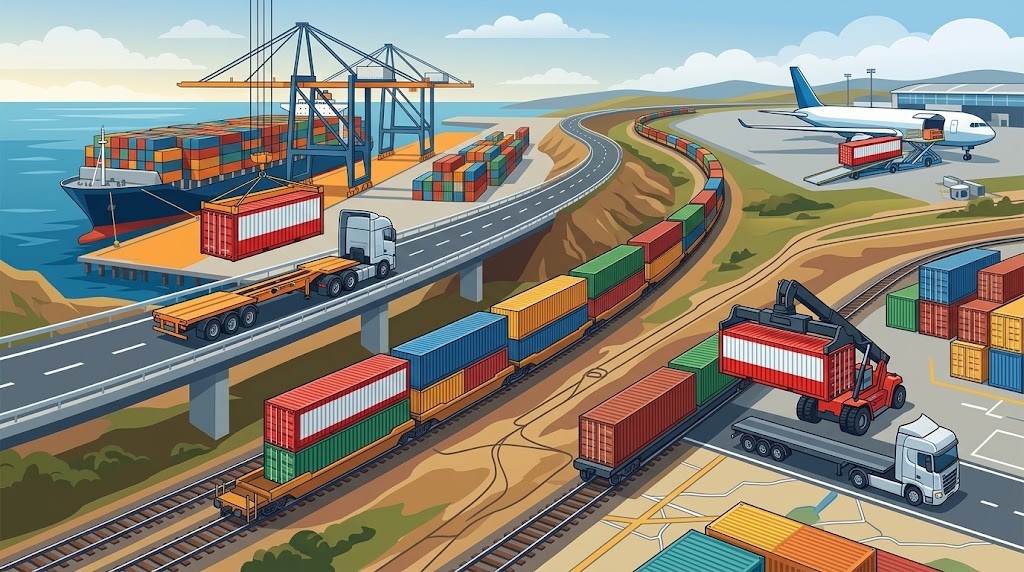
So, what is intermodal transportation? In simple terms, it is a way of moving freight using two or more transportation modes, such as trucks, trains, and ships, while keeping the cargo in the same container during the transfer.
This article discusses the meaning of intermodal transportation, how the process works, its common types, benefits, limitations, and the situations where it can be a practical option for modern supply chains.
What Is Intermodal Transportation?
Intermodal Transportation Definition
Intermodal transportation is the movement of goods using two or more modes of transportation during a single journey. These modes can include trucks, rail, and ocean transportation.
One of the main characteristics of intermodal transportation is that the cargo itself does not need to be unloaded when it moves from one transportation mode to another. Instead, the same standardized container is transferred between vehicles or transportation systems.
This approach helps make the movement of freight more organized while reducing unnecessary cargo handling.
Intermodal Transportation Meaning in Logistics
In logistics, intermodal transportation commonly involves a combination of trucking, rail, and ocean freight, depending on the origin, destination, and requirements of the shipment.
For example, trucks are often used for first-mile and last-mile transportation, while rail can handle the longer inland portion of the journey. Ocean transportation may also be involved when goods are moving through international ports.
The use of standardized containers makes these transfers easier because the cargo can remain inside the same container throughout different stages of transportation.
In other words, instead of unloading the goods every time the transportation mode changes, the container itself is moved.
This can help reduce handling, improve cargo protection, and make the overall logistics process more efficient.
How Intermodal Transportation Works
Understanding how intermodal freight moves is important because the process involves several transportation stages.
Although the exact process can vary depending on the shipment and route, a typical intermodal movement can be divided into several steps.
Step-by-Step Process
1. Pickup
The process usually begins with a truck collecting the loaded container from the shipper's warehouse, factory, distribution center, or another designated location.
2. Rail Transfer
After pickup, the container is transported to an intermodal rail terminal. From there, it is loaded onto a train for the long-distance portion of the journey.
Rail is particularly useful for longer routes because it can move large quantities of freight over significant distances.
3. Destination Transfer
When the train reaches the destination rail terminal, the container is transferred from the rail network to another transportation mode, usually a truck.
The cargo remains inside the container during this transfer.
4. Final Delivery
A local truck then transports the container from the rail terminal to the final destination, such as a warehouse, distribution center, or manufacturing facility.
This combination of truck and rail transportation is one of the most common forms of intermodal transportation.
Types of Intermodal Transportation
Intermodal transportation does not follow one fixed combination of transportation modes. The appropriate combination depends on factors such as distance, shipment size, delivery requirements, and transportation infrastructure.
Common Intermodal Combinations
Truck + Rail
This combination is widely used for long-distance inland transportation. Trucks provide local flexibility, while rail handles the longer middle portion of the journey.
Truck + Ocean
Truck and ocean transportation can be combined when goods need to move between inland locations and international ports. Trucks handle local transportation, while vessels carry the cargo across international routes.
Rail + Ocean
Rail and ocean transportation can be useful for large-scale international imports and exports. Rail connects inland markets with ports, while ocean vessels handle the international leg.
Truck + Air
Truck and air transportation can be used when delivery speed is more important than transportation cost. Trucks move the cargo to and from airports, while air freight handles the long-distance portion.
Therefore, the most suitable combination depends on the characteristics of the shipment and the supply chain.
Benefits of Intermodal Transportation
Intermodal transportation has become an important option for businesses that need to move freight over long distances.
By combining the strengths of different transportation modes, businesses can balance cost, capacity, delivery requirements, and operational efficiency.
Why Businesses Choose Intermodal Freight
Lower Transportation Costs
For long-distance shipments, rail can often provide a more economical alternative to moving the entire journey by truck. This can help businesses manage transportation expenses, particularly when shipping larger volumes.
Improved Fuel Efficiency
Rail transportation can move large quantities of freight while using less fuel per unit of cargo than traditional long-distance trucking. As a result, intermodal transportation can contribute to more efficient freight movement.
Reduced Cargo Handling
Because the cargo remains inside the same container when transportation modes change, there is less need to physically handle the goods. This can reduce unnecessary handling and help lower the possibility of cargo damage.
Better Capacity Availability
Intermodal transportation can also provide an alternative when trucking capacity becomes limited. During busy shipping periods, combining rail with local trucking can give businesses another way to move their freight.
More Sustainable Logistics
Another consideration is environmental performance. Rail transportation can offer greater fuel efficiency for long-distance freight movement, which may help companies reduce transportation-related emissions and support broader sustainability objectives.
For businesses managing regular long-distance shipments, these advantages can make intermodal transportation a practical part of a broader logistics strategy.
Intermodal vs Multimodal Transportation
The terms intermodal and multimodal transportation are sometimes used interchangeably. However, they describe different transportation arrangements.
Understanding the distinction is important when selecting a logistics solution.
Key Differences
| Factor | Intermodal Transportation | Multimodal Transportation |
|---|---|---|
| Containers | The same container is generally maintained throughout the journey | Containers or handling arrangements may change |
| Handling | Less direct cargo handling during transfers | More handling may be required depending on the shipment |
| Contracts | Multiple carriers or transportation arrangements may be involved | Usually organized under a single contract |
| Risk | Fewer physical handling points can help reduce cargo handling risks | Risk and responsibility are generally managed through one coordinated arrangement |
In simple terms, intermodal transportation focuses on moving the same cargo in the same container through different transportation modes.
Multimodal transportation, meanwhile, focuses more on coordinating multiple transportation modes under one overall transportation arrangement.
The choice between the two depends on the shipment, route, operational requirements, and the type of logistics management a business needs.
When Should You Use Intermodal Transportation?
Intermodal transportation can be useful in many situations, but it may not be suitable for every shipment.
It is generally more practical when the transportation distance is long and the shipment does not require extremely fast delivery.
Best Use Cases
Long-Distance Shipping
Intermodal transportation can be a practical option for long-distance routes within Canada, such as shipments moving between Toronto and Vancouver.
Cross-Border Shipping
Businesses moving freight between Canada and the United States can also use intermodal transportation to connect trucking and rail networks across the border.
Non-Urgent Freight
When delivery speed is important but not the only priority, intermodal transportation can provide a balance between transportation cost and transit time.
High-Volume Shipments
Businesses shipping larger and more regular volumes may find rail particularly useful for the long-distance portion of their transportation needs.
Therefore, companies should consider the shipment's distance, volume, delivery schedule, and budget before deciding whether intermodal transportation is appropriate.
Challenges of Intermodal Transportation
Although intermodal transportation offers several advantages, it also comes with certain limitations.
Understanding these challenges can help businesses plan their shipments more effectively.
Common Challenges
Longer Transit Times
For some routes, intermodal transportation may take longer than direct trucking, particularly when the shipment needs to be transferred between transportation networks.
Complex Coordination
Intermodal transportation involves several carriers, terminals, schedules, and transportation stages. Coordinating these elements requires careful planning.
Limited Flexibility
Changing an intermodal shipment at the last minute may be more difficult than changing a direct truck shipment because rail schedules and terminal operations need to be considered.
Dependence on Infrastructure
Intermodal transportation also depends on the availability of suitable rail terminals, rail networks, roads, and other infrastructure. Some locations may not have convenient access to intermodal facilities.
Therefore, proper planning and coordination are important when using intermodal transportation.
How to Choose the Right Intermodal Logistics Provider
Choosing an intermodal logistics provider is another important part of the process.
A provider should not only arrange transportation but also understand how the different stages of the shipment work together.
What to Look For
Experience with Canadian and Cross-Border Logistics
A provider with experience in Canadian domestic and Canada–U.S. transportation can better understand the requirements associated with different routes and border movements.
Strong Carrier Network
Access to reliable rail and trucking partners can make it easier to coordinate transportation and manage capacity.
Real-Time Tracking and Communication
Shipment visibility is important when multiple transportation modes are involved. Tracking tools and clear communication can help businesses understand where their freight is and identify potential delays earlier.
Transparent Pricing and Cost Optimization
Transportation costs can involve several components, including trucking, rail, terminal handling, and other logistics charges. A clear quotation helps businesses understand what they are paying for and compare transportation options more effectively.
In addition to these factors, it is useful to consider the provider's experience, customer support, service coverage, and ability to handle the specific requirements of your shipment.
Conclusion
Intermodal transportation provides businesses with a practical way to combine different transportation modes within one supply chain.
By bringing together trucks, rail, and, when necessary, ocean or air transportation, businesses can use the strengths of each mode for different parts of the journey. Rail can support long-distance freight movement, while trucks provide the flexibility needed for pickup and final delivery.
At the same time, keeping cargo in the same container during transfers can reduce unnecessary handling and make the transportation process more organized.
However, intermodal transportation is not a one-size-fits-all solution. The right approach depends on the shipment's distance, volume, delivery requirements, available infrastructure, and overall logistics strategy.
For businesses moving freight across Canada or between Canada and the United States, understanding how intermodal transportation works can make it easier to evaluate transportation options and build a logistics process that fits their actual needs.
Frequently Asked Questions
What is intermodal freight?
Intermodal freight refers to cargo transported through an intermodal transportation system. The shipment is commonly placed inside a standardized container that can move between trucks, trains, ships, or other transportation modes without unloading the goods at every transfer point.
Is intermodal transportation cheaper than trucking?
For longer-distance shipments, intermodal transportation can be more cost-effective than using trucks for the entire journey. Rail can handle the long-distance portion while trucks are used for local pickup and final delivery.
However, the actual cost depends on the route, shipment volume, fuel prices, terminal charges, delivery requirements, and other factors.
What industries use intermodal transport?
Intermodal transportation is used across a wide range of industries, including retail, manufacturing, agriculture, automotive, and e-commerce.
It is particularly useful for businesses that regularly move large quantities of goods over long distances.
What is the difference between intermodal and multimodal transportation?
Intermodal transportation uses multiple transportation modes while generally keeping the cargo in the same container throughout the journey.
Multimodal transportation also combines multiple modes, but the shipment is usually managed under a single transportation contract or provider arrangement.
The main difference is therefore not simply the number of transportation modes, but how the shipment and transportation responsibilities are organized.