
Shipping from China to Australia is common for businesses importing consumer goods, machinery, furniture, electronics, and other commercial products. But choosing a shipping method is only part of the process.
The real cost and delivery time depend on several factors, including shipment size, transportation method, customs requirements, and the delivery location in Australia.
For most importers, the main choice is between air freight and sea freight. Air freight is faster and usually makes more sense for smaller or time-sensitive shipments. Sea freight takes longer but is generally more economical for larger volumes.
This guide explains how each option works, what you can expect to pay, how long shipments usually take, and what to prepare before your cargo leaves China.
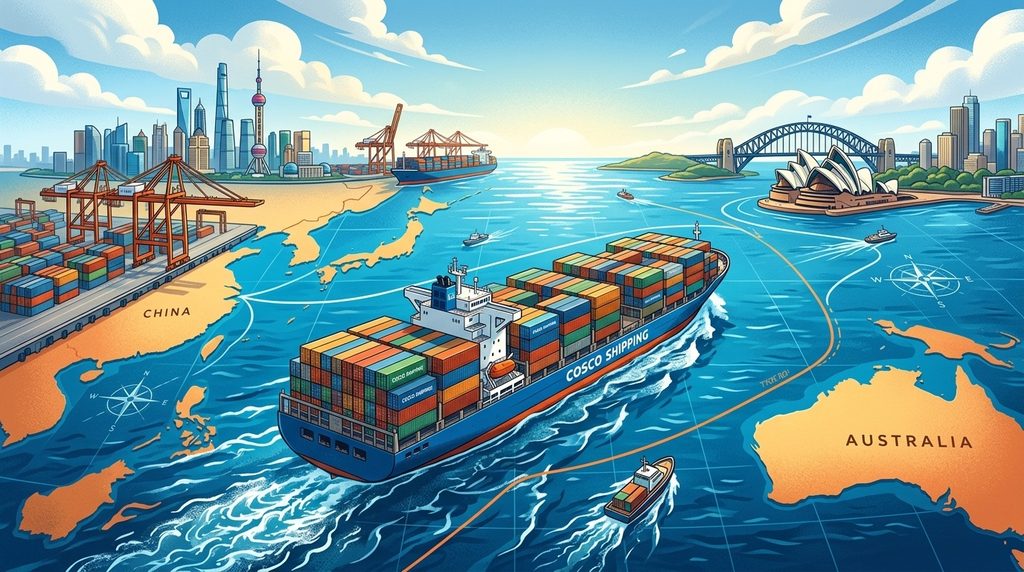
Key Takeaways
- Air freight is the faster option for smaller or time-sensitive shipments.
- Sea freight is generally more economical for larger shipments and containerized cargo.
- Shipping costs depend on weight, volume, cargo type, route, and service level.
- Importing into Australia may involve customs duties, GST, and import processing charges.
- You may need documents such as a commercial invoice, packing details, bill of lading or air waybill, and import permits for certain products.
- Customs clearance and local delivery can add time beyond the actual ocean or air transit.
Air Freight from China to Australia
Air freight is usually the first choice when delivery speed matters.
For standard cargo, shipments can move through airlines, express carriers, logistics companies, or freight forwarders. Common examples include textiles, home goods, toys, tools, and mechanical parts.
Standard air freight from China to Australia generally takes around 3–10 days door to door, depending on the origin, destination, carrier, and customs clearance. Express services can sometimes reduce this to roughly 1–7 days.
The trade-off is cost. Air freight is normally much more expensive than ocean freight, especially as shipment weight and volume increase.
For that reason, air freight tends to work best when:
- The shipment is relatively small
- The goods have a high value-to-weight ratio
- You need faster delivery
- A stockout or production delay would cost more than the higher freight rate
What About Special Cargo?
Not every product can be shipped through a standard air service.
Certain goods may require additional documentation, handling, or carrier approval. These can include dangerous goods, temperature-sensitive products, live animals, and other regulated cargo.
If your shipment falls into one of these categories, check the requirements with the carrier or freight forwarder before booking. A shipment that looks straightforward can become much more complicated if the cargo requires special handling.
Sea Freight from China to Australia
For larger shipments, sea freight is usually the more practical option.
Importers can choose between FCL (Full Container Load) and LCL (Less than Container Load) depending on the amount of cargo.
FCL is generally used when you have enough cargo to justify an entire container. LCL allows you to share container space with other shipments and can be useful when your cargo does not fill a full container.
Sea freight is slower than air freight, but the lower transportation cost makes it attractive for larger or less time-sensitive shipments.
A typical sea shipment from China to Australia may take around 20–45 days door to door, while port-to-port transit is often around 18–36 days. Actual timing can vary depending on the shipping route, port congestion, customs clearance, and inland delivery.
For regular commercial imports, working with a freight forwarder can simplify the process. The forwarder can coordinate the booking, export handling, ocean transportation, customs clearance, and final delivery.
How Much Does It Cost to Ship from China to Australia?
There is no single shipping rate for China to Australia.
The final cost depends on:
- Shipment weight and volume
- FCL or LCL
- Air or sea freight
- Origin and destination
- Cargo type
- Delivery speed
- Customs clearance
- Insurance
- Local delivery and handling charges
For example, a small shipment may be relatively inexpensive to move by air, but the cost can rise quickly as the chargeable weight increases. A larger shipment may be considerably cheaper per unit when moved by sea.
Ocean freight also has different pricing structures depending on whether you use LCL or a full container.
Because freight rates change with fuel prices, vessel capacity, seasonal demand, and market conditions, an old online rate should not be treated as a final quote. For a realistic landed cost, you should request a quote based on the actual cargo dimensions, weight, origin, destination, and delivery terms.
Other Import Costs to Consider
Freight is only one part of the total cost of importing from China to Australia.
Depending on the shipment, you may also need to account for:
- Australian customs duties
- Goods and Services Tax (GST)
- Import processing charges
- Customs clearance fees
- Port or terminal charges
- Documentation fees
- Local delivery
- Cargo insurance, if required
This is why comparing freight rates alone can be misleading.
A lower ocean or air rate does not necessarily mean a lower total import cost if additional destination charges or customs expenses are higher.
Documents You May Need
The exact documentation depends on the type of goods and how you ship them.
Common documents can include:
- Commercial invoice
- Packing list
- Bill of lading
- Air waybill
- Import permit, where required
- Consignor and consignee information
- Customs declaration
The product description and declared value should be accurate. Incorrect or incomplete information can create problems during customs clearance and may lead to delays or additional costs.
For regulated products, check Australian import requirements before the shipment leaves China. It is much easier to resolve a documentation issue before departure than after the cargo arrives at the port.
How Long Does Shipping from China to Australia Take?
Transit time depends heavily on the shipping method.
| Shipping Method | Typical Transit Time |
|---|---|
| Express | 1–7 days |
| Standard Air Freight | 3–10 days |
| Postal/Airmail | 10–30 days |
| Sea Freight | 20–45 days door to door |
These are general estimates, not guaranteed delivery times.
For sea freight, the actual delivery timeline includes more than the vessel’s port-to-port transit. Export handling, origin trucking, customs clearance, port operations, and final delivery can all add time.
Air freight can also be delayed by customs inspections, documentation problems, capacity constraints, or special cargo requirements.
If your inventory is tied to a launch date or production schedule, leave some buffer rather than planning around the shortest quoted transit time.
Customs and Import Requirements in Australia
Australia has strict customs and biosecurity requirements.
Certain products may be restricted or require an import permit before they can enter the country. This is particularly important for goods that could create biosecurity or safety concerns.
Before shipping, check whether your products require additional permits, declarations, inspections, or treatment.
You should also make sure the commercial invoice accurately describes the goods and their value. Customs authorities need enough information to determine the correct treatment of the shipment.
Which Shipping Method Should You Use?
The right option depends less on the name of the carrier and more on what you are actually shipping.
Choose air freight when:
- You need the goods quickly
- The shipment is relatively small
- The cargo has a high value relative to its weight
- A delay would create a significant business cost
Choose sea freight when:
- You are shipping larger volumes
- You can plan further ahead
- Freight cost is a major concern
- Your goods are not particularly time-sensitive
For example, a business replenishing a small quantity of high-value products may prefer air freight because faster delivery justifies the higher transportation cost. A business importing furniture, machinery, or large quantities of consumer goods will often find sea freight more economical.
How to Make China to Australia Shipping Easier
The biggest shipping problems usually happen before the cargo is loaded.
Start by confirming the product requirements, shipment dimensions, delivery terms, and customs documentation. Then compare the total landed cost, rather than looking only at the freight rate.
If you ship regularly, it can also help to work with a freight forwarder that understands both the China export process and Australian import requirements. This can reduce the number of parties you need to coordinate and make it easier to handle customs, ocean or air transportation, and final delivery.
In simple terms, the cheapest shipping method is not always the cheapest way to import.
The better approach is to choose the transportation method that matches your shipment size, delivery deadline, and total import cost.