
Shipping goods by sea is a key component of international cargo transportation. However, many businesses only have a superficial understanding of it and don’t know how it actually works.
As a result, cargo deliveries are often late, costs are not used well, and operations get interrupted. This article will give a detailed look at the whole sea freight process, how it works, useful methods, and ways to keep sea freight running smoothly.
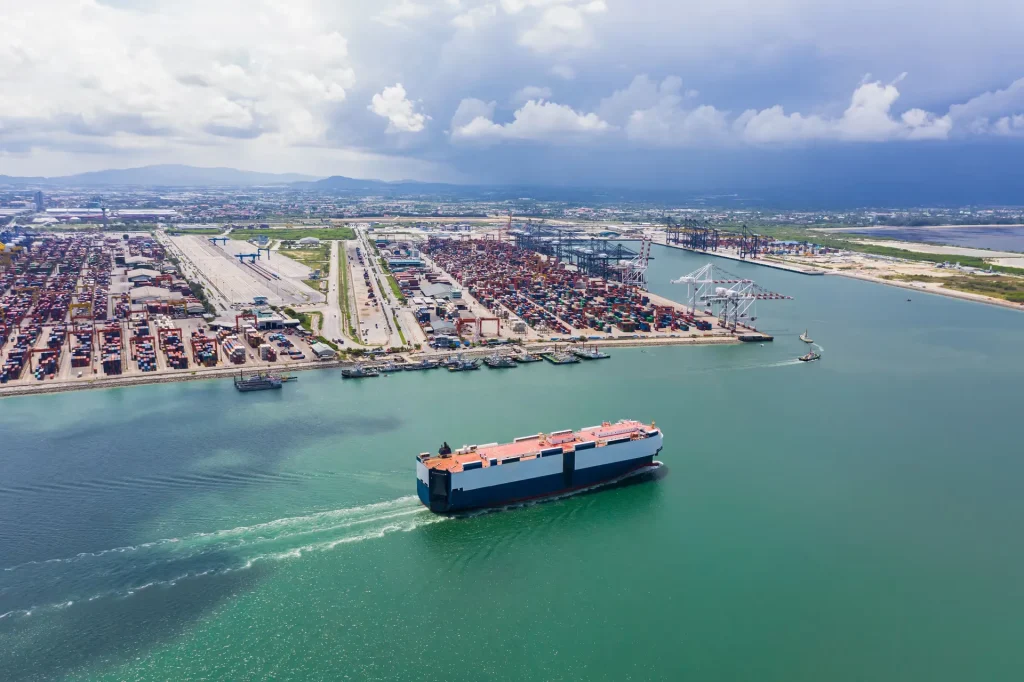
What Is the Process of Shipping Goods by Sea?
The process of shipping goods by sea is a series of steps involved in distributing goods via ocean-going vessels, including booking, packaging, delivery to the port, transportation, and distribution to the destination.
How Does Ocean Freight Work?
Simply put, ocean freight operates through an integrated system involving shippers, ports, and the shipping fleet.
- Goods are sent from the shipper to a warehouse or logistics center
- Less-than-container load (LCL)
- Shipped to the port of origin
- Transported by vessel
- Arrived at the port of destination
- Delivered to the final recipient
This process involves many parties, so it requires a comprehensive logistics system.
A Complete Guide to Shipping by Sea
1. Booking and Planning
The shipper determines the shipping schedule, route, and service type, such as less-than-container load (LCL).
2. Packaging
The cargo is packaged according to standards to prevent damage.
3. Transport to the Port
The cargo is transported by land to the port.
4. Consolidation (Loading)
To improve efficiency, the cargo is consolidated into a single container.
5. Ocean Freight
Containers are transported according to the vessel’s sailing schedule.
6. Unloading at the Port of Destination
Cargo is unloaded from the containers.
7. Last-Mile Delivery
Cargo is delivered to its final destination.
How Long Does Shipping by Sea Take?
The duration of sea shipping varies depending on several factors:
- Distance between islands
- Ship schedules
- Consolidation process (LCL)
- Weather conditions
- Port congestion
Therefore, sea shipping usually takes longer than air shipping, but it is more reliable for large-scale distribution.
Why Does Shipping by Sea Take So Long?
- Waiting for the ship’s schedule
- The cargo consolidation process
- Queues at the port
- Sea conditions
However, with a good logistics system, this process can be more predictable and efficient.
Methods of Shipping Goods by Sea
- LCL (Less Container Load) → an efficient solution for medium-volume shipments
- FCL (Full Container Load) → for large-scale shipments
- Multimodal → a combination of sea and land transport
LCL is the top choice for businesses because it is flexible and efficient.
Framework for Optimizing Ocean Freight
1. Choose the Right Method
Use LCL for volume flexibility.
2. Plan the Schedule
Avoid delays caused by vessel schedules.
3. Use Tracking
Real-time monitoring is essential for control.
4. System Integration
Integrate logistics with business operations.
5. Choose a Logistics Partner
Ensure they have a strong network and robust systems.
Common Mistakes in Ocean Freight
Lack of Understanding of the Shipping Process
- Choosing the Wrong Mode of Transport
- Failure to Use Tracking Services
- Poor Planning