
Importing goods into the United States involves more than paying customs duties. Depending on how your cargo enters the country, additional customs-related fees may apply. One of the most common charges for ocean imports is the Harbor Maintenance Fee (HMF).
The HMF is a federal fee associated with the use of U.S. maritime infrastructure. It is generally assessed on eligible ocean cargo entering the United States and is calculated based on the value of the imported merchandise. For importers, understanding when HMF applies, how it is calculated, and how it differs from other customs fees can help prevent unexpected costs and improve landed-cost planning.
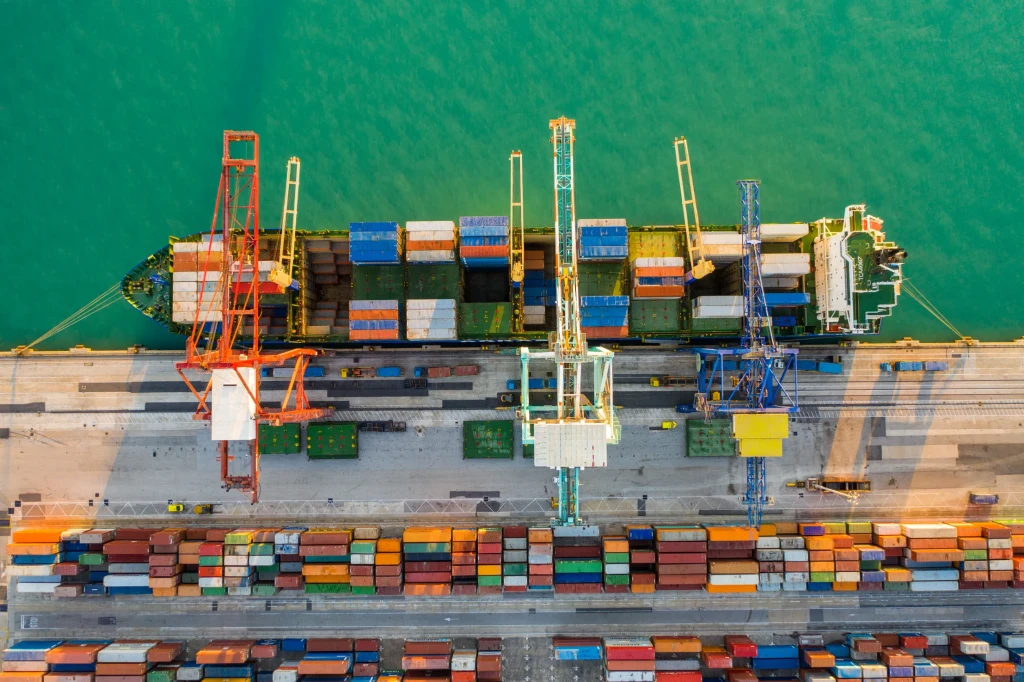
What Is the Harbor Maintenance Fee (HMF)?
The Harbor Maintenance Fee (HMF) is a federal fee collected by U.S. Customs and Border Protection (CBP) on eligible cargo transported by vessel through U.S. ports. The fee was established under the Water Resources Development Act of 1986 to help fund the maintenance and improvement of U.S. ports, harbors, and navigation infrastructure.
Unlike a customs duty, the HMF is not based on the tariff classification of the imported product. Instead, it is an ad valorem fee, meaning it is calculated as a percentage of the value of the cargo.
The current HMF rate is 0.125% of the entered value of the shipment. There is no minimum or maximum HMF charge, so the amount increases directly with the value of the imported cargo.
For example, if an eligible ocean shipment has a customs value of $100,000, the HMF would be:
$100,000 × 0.125% = $125
The revenue collected through the fee is deposited into the Harbor Maintenance Trust Fund and is used, subject to federal appropriations, for eligible harbor and navigation maintenance activities.
Who Pays the HMF?
The importer of record is ultimately responsible for the Harbor Maintenance Fee. This is the individual or company identified on the customs entry as responsible for the imported merchandise and its compliance with U.S. customs requirements.
In practice, many importers rely on a customs broker or freight forwarder to calculate and report the HMF as part of the customs clearance process. The fee is generally reported with the entry documentation and appears alongside other applicable customs charges.
Using a broker or forwarder does not transfer the legal responsibility away from the importer of record. Importers should therefore make sure that the shipment value, entry information, and applicable fees are reported correctly.
For businesses importing regularly, including HMF in the initial landed-cost calculation can make it easier to budget for the full cost of bringing merchandise into the United States.
When Does HMF Apply?
HMF generally applies when eligible commercial cargo is imported into the United States by ocean vessel. The fee is calculated on the entered value of the cargo rather than on the freight rate, container size, or weight of the shipment.
The fee can apply regardless of whether the imported merchandise is subject to customs duty. In other words, duty-free treatment does not automatically mean that the shipment is exempt from HMF.
HMF may also apply to certain admissions into Foreign-Trade Zones (FTZs), depending on how and when the merchandise enters U.S. commerce. Importers using FTZs should therefore review the specific entry and withdrawal requirements rather than assuming that an FTZ automatically eliminates the fee.
One important distinction is the transportation mode. HMF is associated with covered maritime movements and does not apply simply because goods are imported into the United States. Shipments arriving by air, truck, or rail generally do not incur HMF.
Similarly, cargo that arrives at a Canadian port and subsequently moves into the United States by truck or rail is generally outside the scope of HMF because the cargo did not enter the United States through a vessel call at a U.S. port.
What Shipments Are Exempt From the Harbor Maintenance Fee?
Although HMF applies to most eligible ocean imports, certain types of cargo and maritime movements may qualify for an exemption.
Examples can include:
- Cargo arriving in-bond for direct export from the United States
- Certain ship's stores, vessel equipment, and bunker fuel
- Certain humanitarian donations
- Certain unprocessed or freshly caught fish and aquatic products
- Specific movements involving U.S. territories or intra-port transportation
- Certain government or qualifying government-related vessels and cargo
The treatment of Foreign-Trade Zone merchandise also requires attention. Merchandise admitted into an FTZ may not be subject to the fee in the same way as ordinary consumption entries, but HMF obligations can arise when merchandise is subsequently entered into U.S. commerce.
It is also important to distinguish HMF exemptions from preferential trade programs. A shipment may qualify for reduced or zero customs duty under a trade agreement while still being subject to HMF. The HMF is based primarily on the applicable type of cargo movement rather than whether the merchandise receives preferential tariff treatment.
How Do MPFs and HMFs Differ?
The Harbor Maintenance Fee and Merchandise Processing Fee (MPF) are both commonly encountered during U.S. import clearance, but they serve different purposes and are calculated differently.
The HMF applies primarily to eligible ocean imports and is calculated at 0.125% of the entered value. It has no minimum or maximum charge.
The MPF, on the other hand, is a customs processing fee that can apply to imports regardless of whether the shipment arrives by ocean, air, truck, or another transportation mode. For formal entries, MPF is calculated using a separate percentage and is subject to minimum and maximum amounts.
The two fees can therefore appear on the same customs entry, but one should not be treated as a substitute for the other.
| Fee | Harbor Maintenance Fee (HMF) | Merchandise Processing Fee (MPF) |
|---|---|---|
| Primary purpose | Supports eligible harbor and navigation maintenance | Covers customs processing costs |
| Main application | Eligible ocean imports | Most qualifying U.S. imports |
| Calculation | 0.125% of entered value | Separate CBP rate and entry limits |
| Minimum charge | None | Yes, for applicable formal entries |
| Maximum charge | None | Yes, for applicable formal entries |
| Transportation mode | Primarily ocean | Multiple transportation modes |
For importers, the practical takeaway is simple: an ocean shipment may be subject to both HMF and MPF, in addition to customs duties, tariffs, and other applicable charges.
How Do You Calculate the Harbor Maintenance Fee?

Calculating HMF is straightforward. Multiply the entered customs value of an eligible ocean shipment by 0.00125, which represents 0.125%.
HMF = Entered Value × 0.00125
For example:
Shipment value: $50,000
HMF rate: 0.125%
$50,000 × 0.00125 = $62.50
Therefore, the Harbor Maintenance Fee for a $50,000 eligible shipment would be $62.50.
For a higher-value shipment:
Shipment value: $200,000
$200,000 × 0.00125 = $250
The HMF would therefore be $250.
Unlike MPF, HMF does not have a standard minimum or maximum fee. This means that a shipment with a higher declared value will generally generate a proportionally higher HMF.
Importers should also remember that HMF is only one part of the total import cost. Customs duties, tariffs, MPF, brokerage charges, port-related fees, inland transportation, storage, and other expenses may also affect the final landed cost.
Why HMF Matters for Importers
The Harbor Maintenance Fee may appear relatively small compared with customs duties or ocean freight, but it can become significant for businesses handling frequent or high-value imports.
For example, an importer moving $10 million of eligible ocean cargo over time would generate approximately $12,500 in HMF at the current 0.125% rate. For companies with substantial import volumes, failing to include the fee in landed-cost calculations can therefore create a recurring gap between estimated and actual import costs.
HMF also matters because it is part of the broader system used to fund U.S. maritime infrastructure. The Harbor Maintenance Trust Fund supports maintenance activities such as dredging and other eligible navigation infrastructure, which are important to keeping commercial ports accessible to ocean vessels.
At the same time, the current structure of HMF has been the subject of policy debate. Because the fee is based on cargo value and primarily collected from imports, some policy analysts have argued that a future system based more directly on vessel use or tonnage could distribute infrastructure costs more evenly among port users. Such proposals remain part of the broader policy discussion and do not change the current HMF calculation for importers.
For importers, the most important point is to treat HMF as a normal component of ocean-import costs. Understanding when the fee applies, checking whether an exemption is available, and including the 0.125% charge in landed-cost calculations can help businesses avoid unexpected customs expenses and maintain more accurate import budgets.