
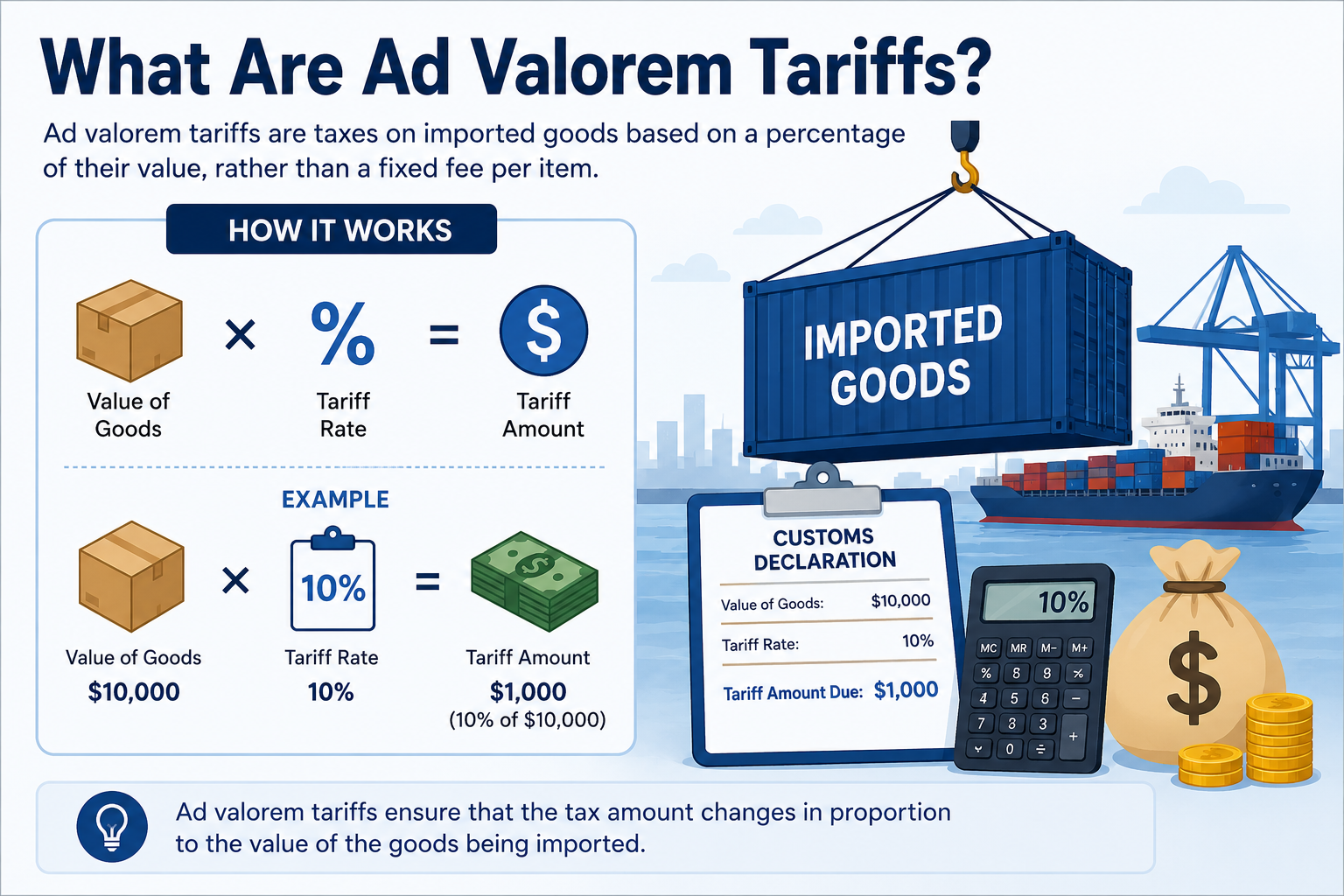
Ad valorem tariffs are taxes that are based on a percentage of the value of the goods being brought into the country. With ad valorem tariffs, the fee amount changes based on the value of the goods, not their weight, quantity, or unit price. This means the tax amount increases as the value of the goods rises. Ad valorem taxes are used by many countries to control trade. The reason for this is that ad valorem duties make it easier to tax things based on their true value. They help keep U.S. businesses safe and keep goods under control. They also bring in substantial revenue for the government.
How These Tariffs Impact Logistics
When ad valorem duties are added to goods, importers and logistics companies must carefully plan how to ship them, clear customs, and keep the supply chain moving. Because these duties are based on the goods’ declared value, it is very important to correctly value items, use the correct HS code, and get all the customs paperwork ready. When goods are declared, valued, or classified incorrectly, they can lead to additional taxes, fines, or clearance delays, all of which increase operating costs and make the supply chain less efficient.
Examples of These Tariffs in Action
- Importing Apparel: In the UK, imported clothing is subject to taxes based on the type of product and its origin. For example, a shipment of clothing worth $12,000 would have a tax of $960 at an 8% rate. These costs are usually included in the retail price and in buying decisions.
- Electronics and Machinery: India charges taxes on many imported electronics and industrial machines based on their value. For example, if a shipment of machines is worth $25,000 and has a 10% tax rate, the importer would pay $2,500 in taxes. These taxes usually help support local manufacturing and industry growth.
- Consumer Goods: Australia also charges taxes on some consumer products based on their value. For example, a shipment of home appliances worth $7,000 with a 5% tax rate would have $350 in import taxes.
These tax rates are usually low but still affect the importer’s calculation of the total cost, insurance, and shipping price.
Managing These Tariffs in Logistics
Ad valorem duties must be managed well in foreign trade in order to keep costs down and follow the rules. First, businesses need to correctly label their goods and use the correct HS codes to ensure tax rates are fair and comply with the rules. Second, they should make full use of policy tools like free trade agreements (FTAs) to see if they are eligible for duty cuts or special treatment, which would lower the total cost of imports.
During the declaration process, companies should also ensure that the value of the goods is correct and that all paperwork is complete and consistent. If these things aren’t done correctly, companies could face customs questions, fines, or delays in clearance. Standardized procedures for declaring goods and careful document management can effectively reduce the risk of tariff disputes.
Overall, knowing about and dealing with ad valorem duties correctly not only helps to lower the costs of logistics but also makes global supply lines more stable and efficient. So, logistics pros need to plan ahead, ensure their declarations are correct, and monitor changes to trade policies to keep costs and risks low.