
Port congestion in the maritime trade sector is becoming increasingly severe and a cause for concern. Ports around the world are facing a backlog of containers, leading to ever-longer wait times—in some cases, queues can stretch on for weeks.
Port congestion is severely impacting global supply chains, as maritime transport accounts for more than 80% of global trade. Given that there is currently no clear prospect of improvement, how can operators minimize the impact of port congestion on their supply chains? Here, we’ll explore how port congestion affects supply chains and provide strategies for planning and mitigating its impact.
What Is Port Congestion?
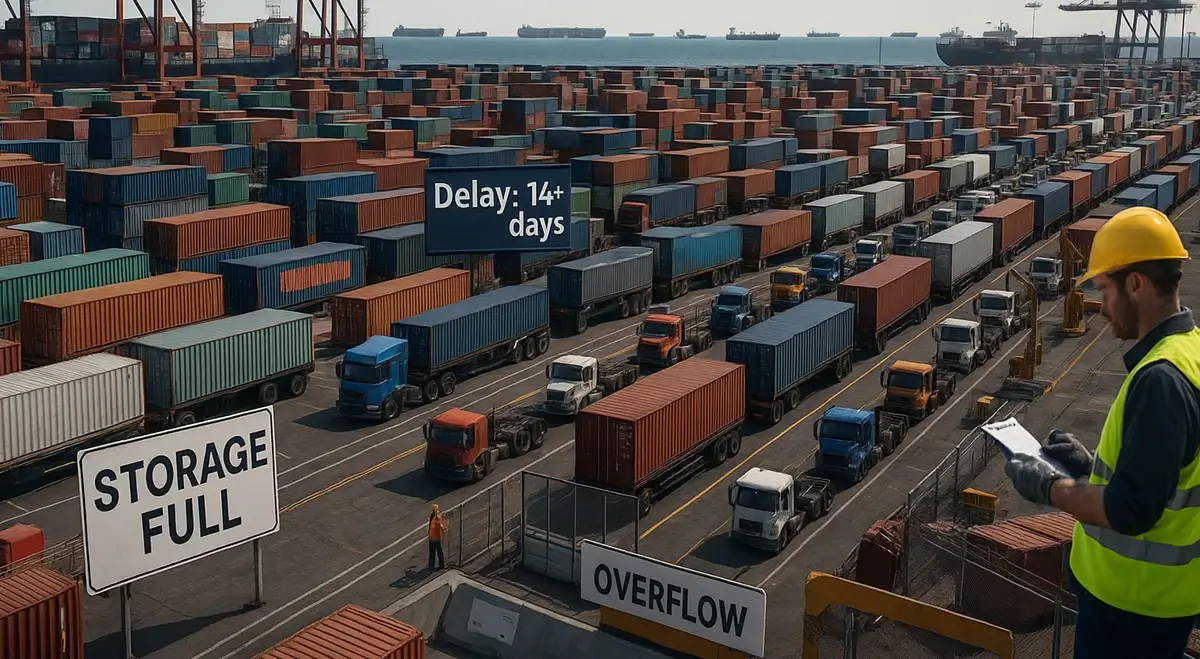
Port congestion refers to the excessive accumulation of ships, containers, or cargo in a port, resulting in delays to normal operations. There are many causes of congestion, such as:
- Increased demand for Sea shipping.
- Insufficient infrastructure.
- Limitations on storage capacity.
- Administrative and regulatory challenges.
- Adverse weather conditions.
How Port Congestion Amplify Supply Chain Stress?
It is hard for ocean, terminal, and inland logistics to work together when there are problems at ports. This puts a lot of stress on the supply chain when there isn’t much room for error in port systems, even small problems quickly spread outside of the port.
- More ships are grouped as berthing times get pushed back.
- As the yard gets more crowded, containers move more slowly.
- Longer dwell times for containers cause delays at the port.
- The way the terminal works doesn’t match up with the times that trucks and trains run.
- It gets more difficult to get chassis and equipment.
- When traffic is bad, it moves inland to storage and distribution hubs.
- Prices rise when shippers change the route of cargo or carry too much stock.
How to Navigate Port Congestion and Reduce Shipping Delays in the U.S.
1. Advance planning of routes and times
Inefficient planning quickly becomes a risk when the port is operating under saturation. Therefore, developing alternate routes, maintaining multiple scenarios, and frequently updating estimated transit times become essential principles, as they allow the company to react without improvising.
Anticipation helps ensure that land, sea, and customs operations remain consistent even when conditions change within hours. In addition to adjusting routes, it's necessary to analyze the availability of connecting ports, waiting history, and demand patterns.
2. Document and customs optimization
Document errors represent one of the most common causes of delay; a single incorrect piece of data can turn an ordinary review into a prolonged stoppage, especially at times when the port is operating at maximum pressure, generating unnecessary costs and delays that could have been avoided.
Document optimization involves reviewing permits, validating descriptions, verifying regulations, and confirming that all documents exactly match the merchandise. By strengthening this phase, companies ensure a smoother process. Impeccable documentation reduces inspections, avoids last-minute corrections, and allows cargo to be processed more efficiently, even if the port is congested.
3. Integration with logistics operators
Logistical fragmentation often increases the risk of delays, so integrating operations between carriers, shipping companies, customs agents and internal areas creates a coordinated structure that responds more quickly to unexpected variations, since all actors have access to the same information.
This synchronization avoids duplication of effort and reduces the risk of errors that could lead to downtime. Furthermore, integration facilitates timely decision-making; that is, when a logistics operator has up-to-date information on port status, they can adjust routes, reschedule deliveries, and redistribute cargo capacity without affecting the overall pace.
4. Real-time monitoring of port capacity
Continuous monitoring has become an indispensable tool. Current platforms allow users to visualize how many ships are waiting, the average unloading time, and the congestion level of the connector yard, providing a clear picture of the port's actual status. This information anticipates risks and enables proactive decision-making before congestion reaches critical levels.
Companies that adopt this monitoring gain a significant advantage; the ability to react hours or days in advance provides a much wider operational margin and reduces the need to solve problems when it is already too late, significantly improving the continuity of the flow of goods.
5. Port and mode diversification strategies
Relying on a single port increases the risk of delays. Therefore, diversifying entry points and combining different modes of transport becomes a protective strategy that allows companies to absorb operational pressure without compromising delivery times, especially during peak seasons when saturation reaches high levels. This flexibility keeps the logistics chain running smoothly even when a port experiences severe difficulties.
Diversification also facilitates rapid adjustments; when the company identifies congestion at a major port, it can redirect part of the operation to alternative options without completely stopping the flow, thus reducing costs and avoiding prolonged disruptions.
As we can see, port congestion is a recurring risk in international trade, but it can be managed with clear strategies and a solid operational structure that offer real protection, keeping imports stable even in complex scenarios, reducing costs and avoiding disruptions that could compromise business continuity.
Geographical Hotspots of US Port Congestion
West Coast Ports (Los Angeles, Long Beach)
The twin ports of Los Angeles and Long Beach handle a significant portion of US imports, particularly from Asia. These ports have been the epicenter of congestion, with cargo ships often waiting days or weeks to unload.
East Coast Ports (New York, Savannah)
As West Coast ports became overwhelmed, many companies shifted to East Coast ports like New York and Savannah. However, this has led to congestion spreading across the country.
Gulf Coast Ports (Houston)
The Gulf Coast, particularly Houston, has also seen increased congestion as companies seek alternative routes to move goods into the country.
Ssfeshipping strategy in the face of global congestion
In such a volatile environment, Ssfeshipping has reinforced its commitment to providing agile, intelligent logistics solutions adapted to the global reality:
- Strategic rerouting: We work with multiple alternative ports to avoid congested hubs. In some cases, we have implemented intermodal routes that combine maritime, road, and rail transport.
- Proactive coordination with international agents: We maintain direct communication with our partners at critical ports to anticipate delays and secure space on ships.
- Real-time transparency: Through our digital platforms, our customers receive constant updates on the status of their shipments.
- Documentary and operational flexibility: In the event of last-minute changes, we have a team ready to manage re-documentation and changes to the consignee or port of destination.
- Personalized attention: Each shipment is managed with a consultative approach, offering personalized recommendations to minimize risk and maximize efficiency.
FAQ's
What are the main causes of shipping container delays in the U.S.?
The most common causes include labor shortages, limited truck driver availability, weather disruptions, and port infrastructure bottlenecks. Fluctuations in global demand and carrier capacity also contribute to ongoing delays.
How does port congestion affect the supply chain?
Port congestion delays the movement of goods, resulting in longer wait times, increased shipping costs, inventory imbalances, and missed delivery deadlines, all of which disrupt the entire supply chain.
What are the solutions to port congestion?
Solutions include diversifying port access, using technology for real-time tracking, pre-clearing customs digitally, strengthening inland logistics coordination, and maintaining inventory buffers.
Why does port congestion keep happening?
High consumer demand, uneven equipment distribution, and staffing shortages keep major terminals overloaded.
How does port congestion affect shipping container prices?
Fewer available vessels and delays increase storage and demurrage costs, keeping container prices elevated.