Ocean freight is one of the most common modes of transport for international trade. In fact, vast quantities of goods are shipped this way. Although ocean freight is prevalent, calculating its costs is a complex task. This is because it involves numerous factors. So, what factors should be considered when calculating ocean freight costs? Understanding the hidden factors that influence ocean freight pricing will help you manage your resources more effectively and avoid unnecessary expenditure.
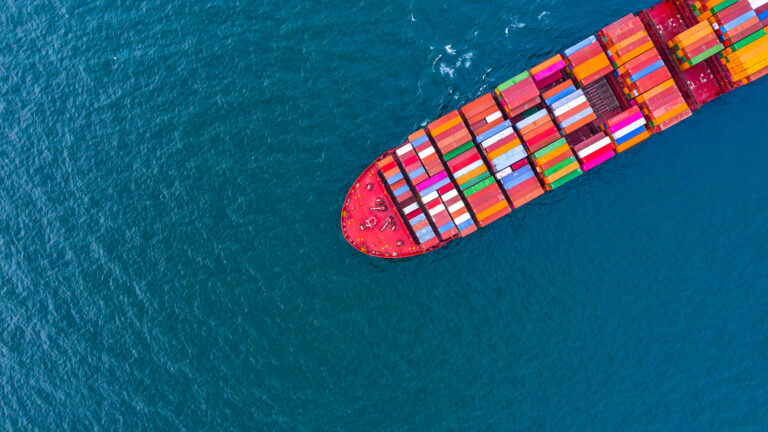
Container ship carrying container for business freight shipping import and export, Aerial view container ship arriving in commercial port.
Factors that will drive up ocean freight rates in 2025
- Tariff Wars: The new round of tariffs that the US has imposed has triggered global retaliation and trade diversion, creating bottlenecks and inflating costs on alternative routes.
- Supply vs. Demand: Port overload has led to congestion. Container shortages have also led to congestion. These have happened on the safest routes. This has led to the saturation of logistics capacities.
- Operating Costs: Bunker fuel costs have escalated dramatically, and insurance premiums have increased substantially. The maintenance of contemporary fleets, which is mandated by environmental regulations, is also putting significant pressure on shipowners.
- Geopolitics and Uncertainties: Conflicts in the Red Sea affect predictability and planning. So do blockades in the Suez Canal. And tensions between major powers.
Ocean freight rates are becoming increasingly unpredictable, and port capacity is shrinking. Trade tariffs are being imposed around the world, particularly by the largest economies. Consequently, the global logistics chain is becoming increasingly uncertain. In order to keep logistics costs under control, companies need to take proactive steps. These include using cargo consolidation, signing long-term freight contracts and diversifying suppliers and destination markets. These strategies help manage costs, strengthen the supply chain and mitigate the risks posed by tariffs.
What are the main components of ocean freight rates?
When you look at ocean freight rates, you will see several costs that can add up fast. These include port fees, storage, security, loading and unloading, paperwork, extra fuel costs, and inspection fees. Your total cost will depend on what you are shipping, which ports you use, your shipping path, and current prices. By keeping track of each of these costs, you can get a better price estimate and avoid surprise charges later.
Ocean Freight Surcharge: what to consider
Extra costs, as already mentioned, have a direct impact on the logistics budget and, if ignored, can compromise the margin of the operation or generate surprises when closing the import. Below are the main ones.
THC (Terminal Handling Charge)
This is the port handling fee charged for loading and unloading the container at the terminal. It can be applied both at the origin and at the destination, and the amount varies according to the port, the type of cargo, and the shipowner.
BAF (Bunker Adjustment Factor)
This refers to the variation in the cost of marine fuel. As the price fluctuates globally, shipowners pass on this fluctuation to customers through this fee, which is usually adjusted periodically.
CAF (Currency Adjustment Factor)
This is an adjustment related to currency instability. In transactions involving highly volatile currencies (such as the Brazilian real against the US dollar), this fee seeks to balance the risks of devaluation in the period between quotation and payment.
ISPS (International Ship and Port Facility Security)
A fee charged to cover the costs of security measures required at ports and on ships, which was imposed after the establishment of the ISPS Code, a set of international standards created by the IMO (International Maritime Organization) after the September 11 attacks.
Canal fees
Applied on routes that pass through strategic areas, such as the Panama Canal or the Suez Canal. These passages involve specific logistics costs that are passed on to the shipper.
Demurrage
This is the penalty charged when the importer exceeds the deadline agreed with the shipowner for returning the empty container. The amounts can be daily and increase according to the length of the delay.
Detention
Similar to demurrage, but applied to the period during which the container remains outside the terminal under the importer’s responsibility (e.g., at the distribution center) beyond the contracted time.
Overweight surcharge
A surcharge applied to cargo that exceeds the maximum weight allowed per container or by local land transport legislation.
Factors affecting ocean freight costs
As I said before, many factors affect ocean freight costs. Here are the most important ones.
Type of cargo and volume
The type of cargo being transported is one of the first things to think about. Cargo can be divided into four groups: dry, liquid, dangerous, and refrigerated. Each type of cargo requires specific handling, which affects shipping costs.
Large items, even if they are light, take up more space in containers. This can mean that the overall shipping cost is higher. But if you’re carrying heavy stuff, you’ll have to be more careful, which will affect the final price.
The weight and size
Freight costs depend on the cargo’s total weight and size. Focusing on weight only can mean you pay more because freight is often charged based on space. Bulky lightweight shipments can cost more than expected.
For example, if you are shipping electronics from China to the USA and your goods take up a lot of space in the container, you could be charged based on the volume, even if the shipment is not very heavy. If you don’t know how freight costs are calculated, this can quickly increase your shipping costs.
Distance and Shipping Routes
The distance between the port of origin and the destination port is another important factor. The further away they are, the more expensive they will be to send. Also, the shipping route has an effect on the price, because it might have to stop at different places along the way.
For example, it is usually more expensive to transport goods from Shenzhen to West Coast ports than to East Coast ports. This is because the voyage is longer and there are geopolitical issues involved.
Seasonal Factors
Seasonal changes can make ocean freight rates go up, but many entrepreneurs miss this. For example, rates rise during busy times like Black Friday, Christmas, and the Chinese New Year.
When these busy seasons happen, international shipping demand goes up a lot. This leads to longer wait times and higher shipping costs.
Businesses can avoid these problems by planning their purchases and shipments ahead of time, so they do not get caught in seasonal rushes.
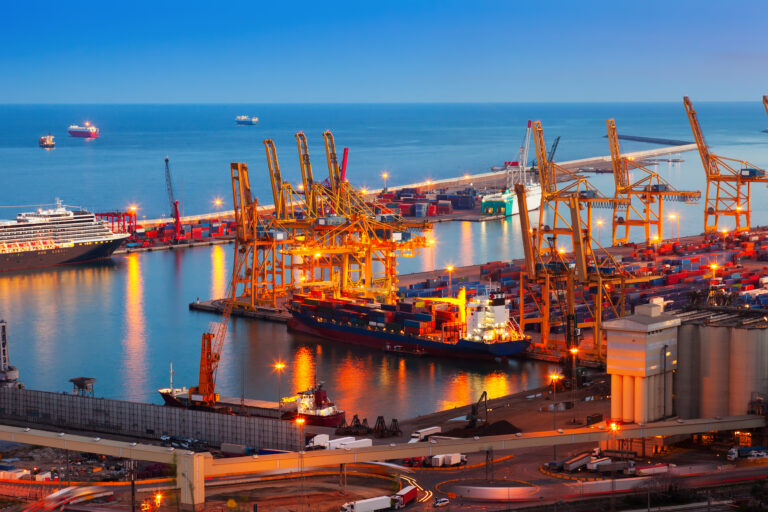
Port de Barcelona in night – commercial/industrial port (Barcelona Free Port)
How to Calculate Ocean Freight Costs
First, we will discuss the different types of ocean freight for importing goods: Less than Container Load (LCL) and Full Container Load (FCL).
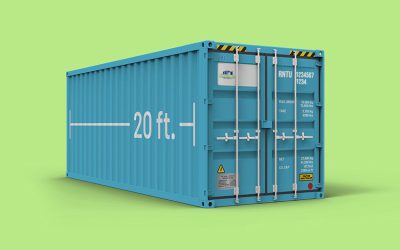
Full Container Load (FCL) usually uses 20-foot and 40-foot containers for carrying dry cargo, but there are many other types of containers. The price of this shipping method depends on the type of equipment used. The price depends on things like the shipping route, how long it takes, and extra charges for big shipments.
When calculating ocean freight costs, one factor to consider is the cargo volume or product weight, whichever is greater.
For example, LCL freight might cost $100 per tonne or cubic metre. If the cargo weighs three tons and occupies one cubic metre, the total freight cost would be around $300.
It is important to note the composition of ocean freight charges, associated costs, and surcharges, as well as any additional fees that may apply based on the cargo’s nature, weight, volume, value, or specific characteristics.
Surcharges may sometimes be applied due to transportation costs; in certain cases, additional fees are levied for transporting dangerous goods (as defined by the International Maritime Organization). Other types of charges include oversize fees, port surcharges, tugboat fees, minimum charges, congestion fees, and insurance premiums.
Key strategies to reduce impact
- Negotiate with suppliers and carriers: Seeking more favourable, flexible terms can help reduce costs. Companies with greater visibility of offers can negotiate better terms and guarantee savings during critical periods.
- Diversification of routes and modes of transport: Exploring alternatives, such as air or road transport, where feasible, can be an effective way to achieve greater predictability and, in some cases, lower costs for certain routes or goods.
- Optimization of logistics processes: Inefficient processes waste time and money. Automating tasks such as comparing quotes, managing suppliers and analysing scenarios can lead to significant cost savings and greater transparency.
- Planning and anticipation: Companies that plan their activities in advance can avoid additional costs associated with rush shipments. By planning shipments in advance and diversifying logistics suppliers, dependence on a single supplier, mode of transport, or route is reduced.
- Use of technology and data intelligence: Technology is one of the most effective tools for coping with the uncertainties of the freight market. Data-driven solutions enable companies to make informed decisions, reduce errors, and identify savings opportunities with predictive analytics.
How to Obtain an Ocean Freight Quote?
Like any estimate, a quote is merely a projection of costs. If the actual cargo differs from what was listed during the quotation process, the final cost will change accordingly. Therefore, as experts in this field, freight forwarders require all detailed information about the cargo.
Several factors must be considered during calculation, such as:
- Origin and destination of the goods;
- Weight and dimensions: Approximate values or figures from previous completed shipments may be used if final measurements are unavailable.
- The value of the goods: Some shipping companies have restrictions on high-value cargo.
- Incoterms to determine whether freight charges are paid at origin or destination.
- If you require the goods to arrive at their destination and know when they are needed, a freight forwarder can better advise you, including providing alternatives in urgent situations.
As you can see, obtaining a freight quote and the process involved can be quite complex. Therefore, choosing a company specializing in this field, such as Ssfeshipping, is crucial.