What is FOB? It is one of the most common delivery terms currently used in the import-export industry. So what distinguishes FOB from CIF? What costs are included in FOB pricing? If you work in this industry, this article will give you a comprehensive overview of FOB and how to apply it accurately in practice.
FOB Shipping Terms and Information
What is FOB?
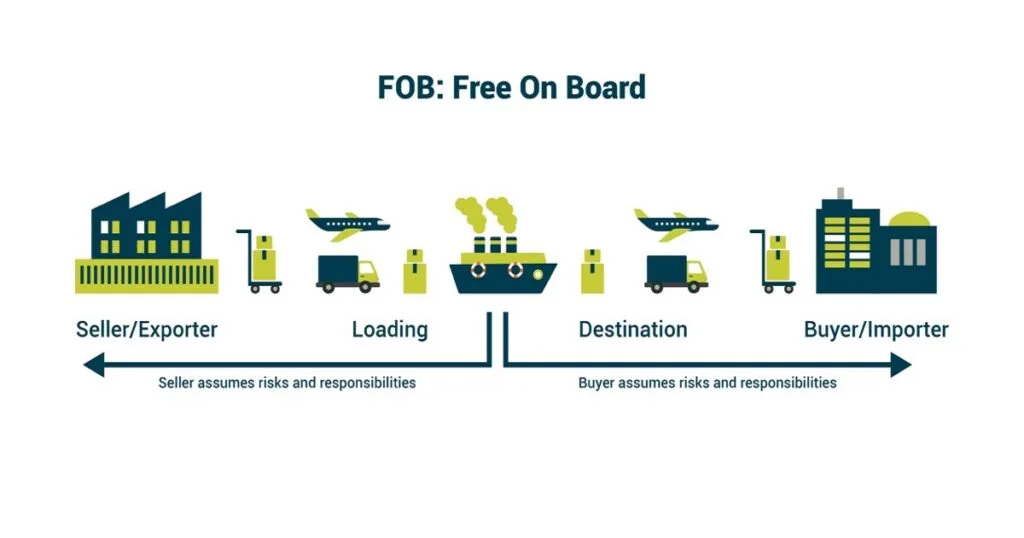
FOB means ‘Free on Board’. It is an international delivery term under the Incoterms (International Commercial Terms). It explains who is responsible for goods when they are loaded onto a ship at the port. After the buyer has paid for the goods, they are responsible for any costs incurred during transportation, insurance, and the risk of damage or loss of the goods.
At this point, the seller is only responsible for ensuring the goods are delivered in the correct type and quantity and for completing the export customs clearance procedures.
When you buy goods under FOB terms, you also have to think about the cost of transportation and insurance. Sea freight is risky. There are many things that can go wrong, like bad weather, storms, high waves, and even pirates. If you don’t have insurance, you could lose a lot of money if the goods get damaged or lost.
In international sales contracts, the FOB (Free on Board) clause usually specifies the loading port to clarify who is responsible for loading the goods. For example, “FOB Tan Thuan Port” means that the seller is responsible for loading the goods onto the vessel at Tan Thuan Port. After that, all costs and risks are the buyer’s responsibility.
What costs are included in the FOB price? How is the FOB price calculated?
FOB means ‘Free on Board’. It is the price of goods calculated at the export port (the port where the goods are loaded) in the exporting country. This price includes all transportation costs from the seller’s warehouse to the vessel’s safe loading and the completion of export formalities. But the FOB price does not include international shipping costs, insurance, or other import costs.
FOB Price Calculation Formula
FOB Price = Finished Product Price + Domestic Container Transportation Fee + Container Lifting Fee + Customs Clearance Fee + Certificate of Origin Application Fee + Other Miscellaneous Expenses
Includes:
- Ex-Factory Price: The basic selling price of the product at the factory, excluding transportation and other processing costs.
- Domestic Transportation Costs: Includes the cost of transporting goods from the factory/warehouse to the export port (by truck, container, or rail).
- Port Loading/Unloading Fees: Fees paid to the port for loading goods onto the vessel, including crane charges and container or bulk cargo handling costs.
- Export Clearance Fees include: declaration fees, Certificate of Origin (C/O) application fees, quarantine fees, fumigation fees, and quality inspection fees.
- Export duties: Certain goods require payment of taxes before leaving the country.
- Other miscellaneous expenses: For example, storage fees, documentation costs, or logistics service charges that the seller must pay to complete delivery.
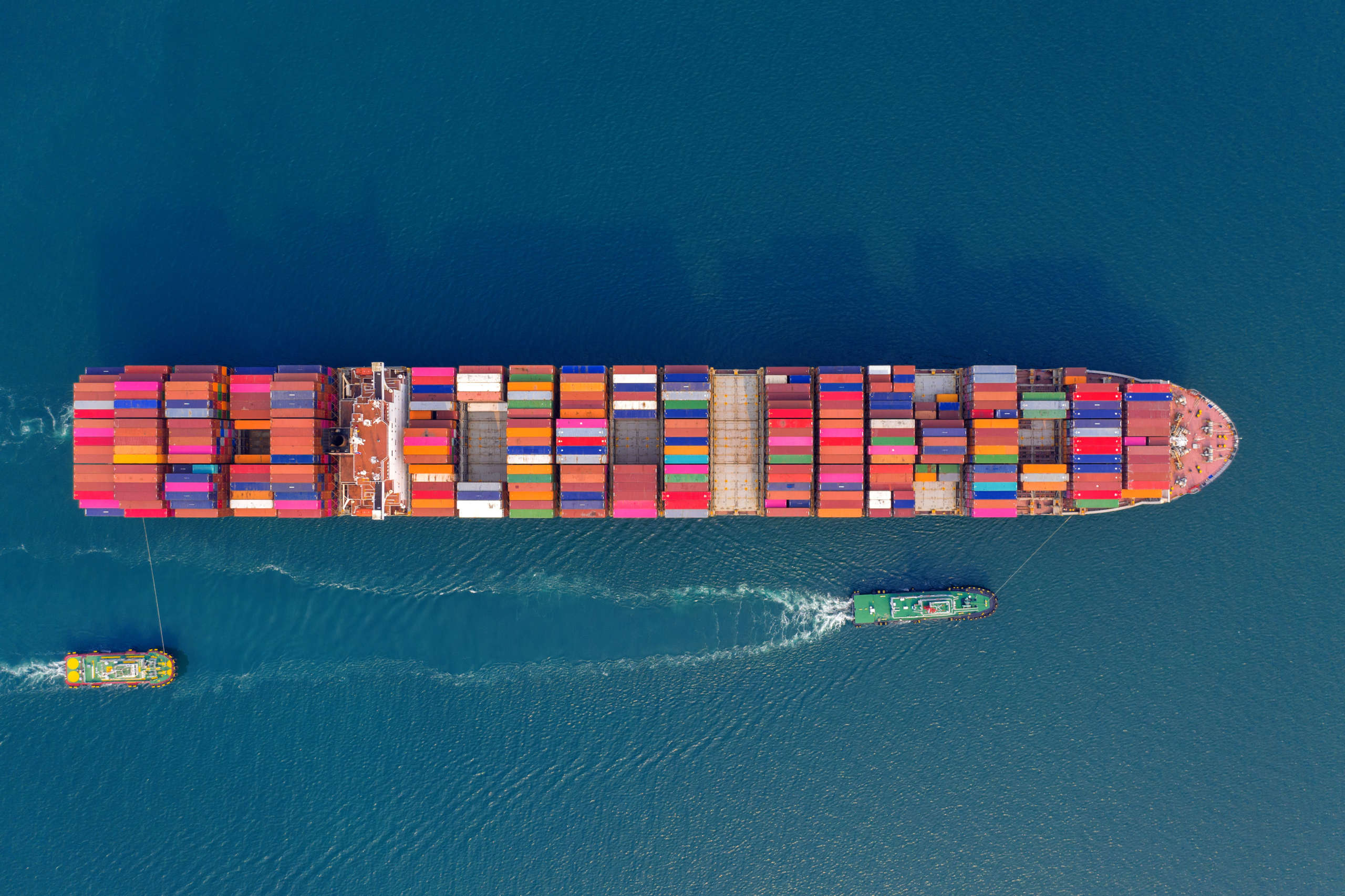
Aerial view of container cargo ship in sea.
Other Terms Related to FOB
When studying FOB terms in international trade, you will frequently encounter two important concepts: FOB Port of Shipment and FOB Destination. These terms help precisely define the time and place where ownership and risk transfer between seller and buyer occur.
FOB Port of Shipment
- This means that as soon as the goods are loaded onto the ship at the port of departure, the buyer is responsible for them.
- From that point on, the buyer is responsible for all international shipping costs, insurance, and any risks that may arise, such as damage, loss, or delays.
- The seller’s responsibilities end when the goods are taken to the port, customs are cleared, and the goods are put on the ship.
FOB Destination
- Under these terms, ownership and responsibility for the goods only transfer when the goods arrive at the buyer’s designated destination port.
- This means the seller bears the risks and costs throughout the entire shipment until the goods reach their destination.
- The buyer’s responsibility only begins upon receipt of the goods at the destination port.
The main difference between FOB Shipment Port and FOB Destination is when responsibility for the goods passes to the customer. FOB Port of Shipment is better for the seller because responsibility begins earlier; FOB Destination is better for the buyer because it ensures the goods arrive safely.
Other Terms
- FOB Costs: These are the costs you incur for loading, unloading, and transporting goods at the port. This includes: loading and unloading fees, transportation fees, port service fees, packaging costs, storage fees, and other related expenses. These costs are usually included in the FOB price. This is how the seller knows how much they will have to pay before the goods are loaded onto the vessel.
- FOB Place of Origin: This is another term for the FOB port of shipment. It signifies that ownership and responsibility for the goods transfer from the seller to the buyer at the place of origin (loading port).
- FOB Bill of Lading: This is a shipping document issued by the shipping company confirming receipt and loading of the goods. The FOB bill of lading can serve as legal evidence for payment and also proves ownership of the goods and their transfer from the seller to the buyer.
Responsibilities of the seller and buyer under FOB terms
In Incoterms, FOB terms are widely used in international trade. The most important point is the clear division of responsibilities between the seller and buyer at each stage: from preparing the goods and completing export procedures to domestic transportation, and loading the goods onto the ship and transporting them to the port of import.
Regarding payment obligations
Seller: Responsible for preparing and delivering goods of the correct quality, quantity, and type as specified in the contract. In addition, the seller must provide a commercial invoice, packing list, certificate of origin (C/O), and other necessary documents to prove valid delivery. During delivery, if costs arise for quality inspection, measurement, or weighing, the seller is also responsible for paying them.
Buyer: Obligated to pay the full contract value on time and according to the agreed method. If there are additional costs related to opening a letter of credit (L/C), bank fees, or document verification costs, the buyer must also pay them.
Regarding licenses and customs procedures
Seller: Ensures the export license is obtained and customs procedures are completed in the exporting country. The seller must pay fees such as quarantine, quality inspection, export tax, and other fees to ensure the goods are eligible to leave the territory.
Buyer: Responsible for import licenses, transit permits (if goods pass through a third country), and import customs procedures. The buyer bears the costs of import duties, VAT, safety inspection fees, plant/animal quarantine (if applicable), and customs clearance fees in the importing country.
Regarding the transportation contract and insurance
Seller: Responsible for transporting goods from the warehouse to the port of loading. During this process, all costs and risks incurred are borne by the seller. The seller is not required to purchase cargo insurance, but if the buyer requests it, they must assist in providing the insurance contract until the goods are loaded onto the ship.
Buyer: Directly signs the international transport contract with the shipping company and pays the ocean freight. The buyer also decides whether to purchase insurance for the shipment during the international journey to minimize the risk of loss or damage to the goods.
Regarding delivery
Seller: Must deliver the goods on time and to the correct location (port of loading) as specified in the contract. The seller must also ensure that the goods are loaded onto the ship safely and notify the buyer as soon as the delivery is complete.
Buyer: Begins to have ownership of the goods as soon as they are placed on the ship’s deck. From that point on, all costs and risks, including demurrage and port-of-departure costs, are the buyer’s responsibility.
Regarding risk transfer
Seller: Bears all risks until the goods are safely on board at the port of export.
Buyer: Bears all risks related to maritime transport and incidents during the voyage, such as damage due to rough seas, ship delays, or risks arising at the port of import.
Regarding freight charges
Seller: Pays domestic transportation costs (from warehouse to port), loading and unloading costs, and export taxes. These costs are usually added to the FOB price.
Buyer: Pays ocean freight from the port of export to the port of import, import taxes, container storage fees at the port of arrival (if any), and domestic transportation costs in the country of import.
Regarding information and documents
Seller: Responsible for promptly notifying the buyer when the goods have been loaded onto the ship, while providing the bill of lading and other necessary documents to prove delivery.
Buyer: Must provide complete information about the port of destination, ship name, and estimated time of arrival to assist the seller in the delivery process. The buyer uses the bill of lading and transport documents to complete the procedures for receiving goods at the port of import.
Regarding the inspection, packaging, and marking of goods
Seller: Must be responsible for inspecting the goods’ quality before delivery. At the same time, goods must be packaged according to international standards and clearly labeled and marked (e.g., fragile goods, dangerous goods, goods requiring cold storage). If the shipment is special, the seller must notify the buyer in advance.
Buyer: If the customs authorities of the importing country require re-inspection or re-packaging, all costs incurred will be borne by the buyer.

Advantages and disadvantages of FOB in import and export
Advantages
- Transparency and ease of understanding: With FOB, both the buyer and seller can clearly understand how costs are calculated. The FOB price includes all costs from the warehouse until the goods are loaded onto the ship at the port of export. As a result, costs are clearly defined, making it easier for both parties to verify and limiting ambiguous fees.
- Effective cost control: The seller only needs to manage domestic costs (transportation from the warehouse to the port, export procedures, and loading). Buyers directly sign international transport contracts, allowing them to choose the appropriate shipping company, route, and services to optimize costs. This helps both parties better control spending than under other terms.
- Minimizing disputes: Thanks to transparency about the point of risk transfer (when the goods are loaded onto the ship), each party’s responsibilities are clearly defined. This significantly reduces disputes arising from loss, damage, or delivery delays.
Disadvantages
- Disadvantages for sellers in international shipping: Since buyers book the ship and control the shipping schedule, sellers have virtually no say in the timing or method of transport once the goods are loaded onto the ship. This can cause difficulties for the seller if there are sudden changes in the delivery schedule.
- The buyer has a greater advantage in terms of price: The buyer can work with multiple shipping companies or different logistics providers to compare and choose the most competitive price. Conversely, sellers are limited in their control over international freight rates and often face difficulties when markets are constantly fluctuating.
Notes on using FOB terms
When studying FOB, it is important to note that this term only applies to sea and inland waterway transport. According to Incoterms, the seller’s responsibility officially ends when the goods are loaded onto the ship at the port of departure, after which point the buyer bears all subsequent risks and costs. Therefore, if goods are delivered to an ICD (Inland Container Depot) or container yard but are not yet on the ship, the seller still bears the risk.
When conducting international transactions under FOB, both the seller and the buyer need to note the following important points:
- Clearly specify the port of loading in the contract: Specifying the port name in the sales contract helps avoid confusion and accurately determines the location of transfer of responsibility.
- Ensure goods are properly packaged: The seller must package, label, and mark the goods in accordance with maritime transport standards to minimize the risk of damage during transit.
- Buyers should purchase cargo insurance: Since risk is transferred when the goods are loaded onto the ship, they should proactively purchase insurance to prevent damage or loss of goods.
- Agree on responsibility for inspecting goods: Both parties need to clearly agree on the inspection of quantity and quality before the goods are loaded onto the ship to avoid disputes later.
It is clear that FOB provides transparency in transactions and is constantly being refined to better meet the practical needs of import and export businesses. Understanding what FOB is and how to apply it will help both buyers and sellers to be more proactive, minimise risk, and enhance efficiency in international trade.