Importing goods from China to the US can be beneficial for retailers and importers alike. The US and China are the two largest economies in the world and have strong trade ties, particularly with regard to American purchases from China. In 2022, the US bought $536.7 billion worth of goods from China.
Many companies purchase goods from China because there are numerous suppliers, prices are competitive, quality is high, and shipping and payment methods are straightforward. Paying close attention to costs and other details is the best way to reap these benefits.
No matter where you’re getting goods from, it’s important to look at the total cost of importing to see if it makes sense. In addition to the price of the item, you also need to consider taxes, fees, shipping, customs duties, and other costs. More details can be found below.
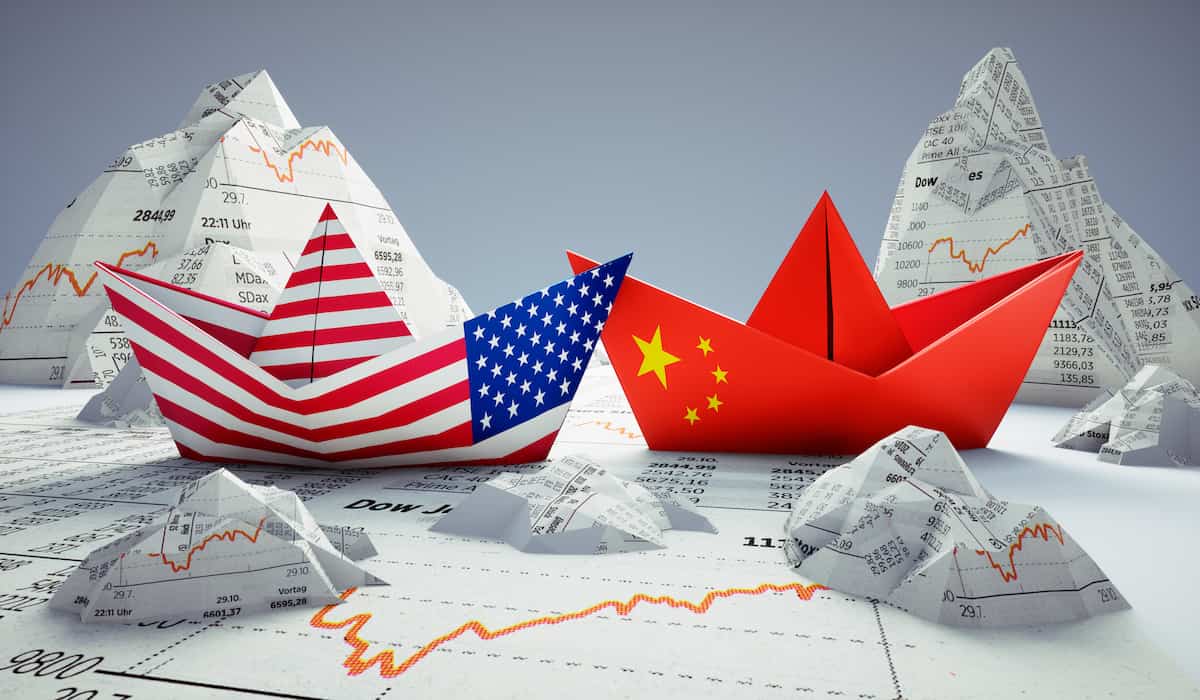
What Is The Tariff On Chinese Goods Imported To The Usa?
Why import from China to the US
- Fast response time
- High production
- Low product costs
- Good quality
- Variety of supply
- Meeting demands for niche products
- Ease of modifying quantities, either up or down
Costs of Importing from China to USA
Importers seeking to bring products from China to the United States should conduct comprehensive cost research. Importing from China requires planning and cost analysis to assess the business’s viability. The following costs must be considered:
Product Cost
These represent the procurement expenses for the goods. Costs vary based on the characteristics and quantities of products the company plans to import, as well as the suppliers under negotiation.
Taxes and Other Fees
To calculate import duties from China to the U.S., you must identify the Harmonized Tariff Schedule (HTS) code for your product. Use an HTS code lookup tool to find the product and its corresponding tariff rate. Additionally, verify whether your product is subject to anti-dumping/countervailing duties or falls under Section 301 tariffs.
Logistics and Transportation
These costs vary based on your chosen shipping method (sea freight, air freight, etc.), the origin/destination ports, and the selected carrier. Ssfeshipping can assist with this step.
Other Fees
These include cargo handling and port maintenance fees (as mentioned above), as well as international cargo insurance premiums, documentation fees, and ancillary charges.
The total cost of each fee always depends on the importer’s business requirements. Once each fee is determined, they can be added together to calculate the total import cost.
Import Duties from China to USA
As with import/export procedures for any country, shipping goods from China to the United States involves a series of duties and fees. Additionally, certain products imported from China incur extra charges. For details, see:
Tariffs
Section 301
A country may choose to impose tariffs on goods imported from another nation. As an example, the U.S. imposed Section 301 tariffs on thousands of goods. Signed in 2018 as part of the U.S.-China trade war, Section 301 imposed tariffs on $550 billion worth of goods imported from China to the U.S. These tariffs are divided into four distinct lists, each covering multiple goods and including exceptions and tariff rates.
Anti-Dumping/Countervailing Duties (AD/CVD)
These duties target specific products to protect domestic industries. Anti-dumping duties are imposed when foreign countries dump goods into the U.S. market at prices significantly below domestic sales prices.
The U.S. International Trade Commission (USITC) administers anti-dumping duties. These duties impose tariffs substantially higher than the goods’ value. Similarly, countervailing duties are imposed on certain products for analogous reasons.
Countervailing duties are imposed when export subsidies place certain products at a competitive disadvantage against domestic industries. The International Trade Administration maintains a list of all Chinese goods subject to countervailing duties.
Merchandise Processing Fee (MPF)
According to U.S. Customs and Border Protection (CBP) regulations, a Merchandise Processing Fee is also payable when importing goods from China into the United States. The specific amount depends on whether the total value of the goods (excluding taxes, freight, or insurance) exceeds $2,500.
- For informal entries (goods valued at $2,500 or less), importers must pay $2.22, $6.66, or $9.99 per shipment;
- Automated imports not processed by U.S. Customs and Border Protection incur a $2.22 fee.
- Manual imports not processed by U.S. Customs and Border Protection incur a $6.66 fee.
- Automated or manual imports processed through U.S. Customs and Border Protection (CBP) incur a $9.99 fee.
- For formal entries (goods valued over $2,500), importers must pay 0.3464% of the goods’ value.
U.S. Customs and Border Protection stipulates that the minimum MPF fee for formal entries is $27.75, with a maximum fee of $538.40.
Harbor Maintenance Fee (HMF)
If goods are shipped by sea, importers must pay the Harbor Maintenance Fee. This fee is 0.125% of the import value, with no minimum or maximum cap. Additionally, this fee applies regardless of whether the goods are duty-free. The Harbor Maintenance Fee funds the upkeep of ports nationwide.
Import Duties Exemption & The De Minimis Shift
Before 2025, you could ship goods worth $800 or less into the U.S. from any country without paying import duties.
The exemption ended for shipments from China and Hong Kong on May 2, 2025, and for all other countries on August 29, 2025. Now, only a few exceptions apply, like unsolicited gifts under $100 and temporary imports for repair or exhibition.
Now, rather than breezing through with minimal checks, most low-value shipments face formal or informal entry procedures that demand thorough data, precise HTS codes, and stricter proof of origin.
How To Calculate Import Duty From China To USA
To calculate import duty from China to the USA, start with the shipment’s customs (entered) value (usually the price the importer pays for the goods), then apply the relevant duty rates.
1. Look up HTS codes
Look up the U.S. Harmonized Tariff Schedule (HTSUS) or talk to a licensed customs broker to find the exact 10-digit HTS code for your item.
2. Determining Customs Value
The declared customs value, which is usually the FOB price, is what the U.S. charges for imports. This amount includes the cost of your product and packaging, but not the cost of shipping and insurance to other countries.
3. Look up applicable tax rates and Section 301
Find the duty rate for your product in the HTSUS. Then, check the USTR’s China tariff lists to see if Section 301 tariffs apply to your import.
4. Calculate the Import Duty
To find your base duty, multiply your customs value by the duty rate. Add the Section 301 duties to your total if they apply.
5. Other Import Fees
Add the Merchandise Processing Fee (MPF) and, for ocean shipments, the Harbor Maintenance Fee (HMF) to get an idea of your total landed cost.
Summary
Import duties and tariffs directly affect the total cost of your goods and services. To keep your business profitable, you need to know what these costs are and how to account for them when setting prices. If you forget about import duties, your costs can suddenly go up. If there is a small mistake on your paperwork, it can cause problems. For example, it can result in shipment delays, supply chain issues, and additional storage fees.
If you don’t follow customs rules, you could get fined, damage your business’s reputation, and face unexpected financial problems.