When you’re planning transport for your business across the world, the way you choose to move your goods affects how well your supply chain works. A good transport plan helps businesses save money and get things to customers more quickly. It also ensures that goods are safe during transport across borders. When it comes to sea freight, FCL (Full Container Load) and LCL (Less than Container Load) are the most popular options, and they suit businesses of all sizes.
To help businesses make the right decisions, it is important to understand what LCL and FCL are, their characteristics, advantages and disadvantages, and the customs procedures and key considerations for import and export. This makes shipping more efficient and reduces potential risks, helping them compete more effectively in the global market. Find out more about this in the next Ssfeshipping article.
Basic definition: What are FCL and LCL?
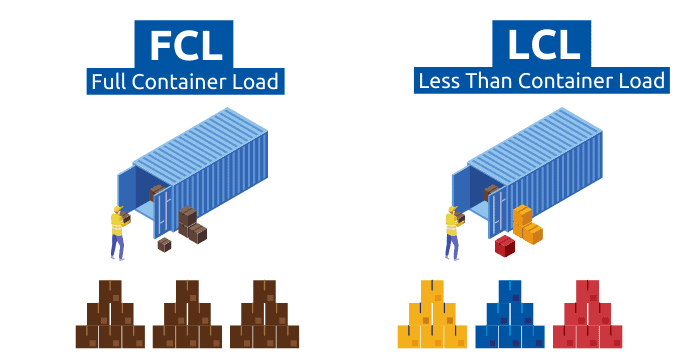
If there are not enough goods to fill an entire container, less-than-container load (LCL) shipping services are used. This method is suitable when there are two or more people to receive the parcel. However, if you need to send a lot of goods, full container load (FCL) shipping is the best option.
LCL stands for ‘less-than-container load’. It means combining multiple shipments that cannot fit into a single container. Each shipment has its own bill of lading. Full Container Load (FCL) is when a full container of goods is shipped by a single shipper in a single shipment.
The container shipping system has two parts: Full Container Load (FCL) and Less than Container Load (LCL). Sea freight uses containers of different sizes. The smallest container can hold 33 cubic metres, while the largest can hold 76 cubic metres.
What is FCL? (Full Container Load)
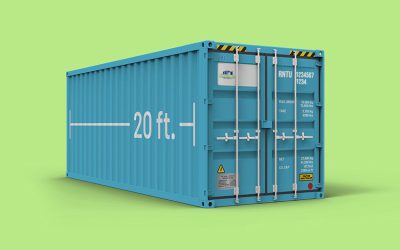
FCL (Full Container Load) refers to loading goods into a full container. This is an option for shippers who have sufficient cargo to fill one or more full containers (usually 20-foot or 40-foot containers).
- Features: An FCL container holds cargo from only ONE shipper. The container is sealed with a lead seal at the shipper’s warehouse and is only opened when it arrives at the consignee’s warehouse, ensuring the highest level of security and safety for the goods.
The best solution from Ssfeshipping: For FCL services, Ssfeshipping Logistics is a strategic partner of major shipping companies (COSCO, ONE, MAERSK, etc.) committed to offering the most competitive ocean freight rates on the market. We guarantee stable space availability even during peak seasons and support businesses in transporting containers to their warehouses quickly and safely by offering door-to-door solutions.
FCL (Full Container Load) Process:
- Pick up empty container: Ssfeshipping dispatches a tractor unit to pick up the empty container from the port and deliver it to your warehouse.
- Load goods: You load the goods and seal the container at your warehouse.
- Export customs declaration & document completion: Ssfeshipping Logistics handles the export customs declaration and completes the necessary documentation before the port/shipping line’s cut-off time.
- Dropping off at the yard: The loaded container truck is dropped off at the port yard to await loading onto the ship.
- Ship departure: The container is loaded onto the ship according to the booked schedule.
Advantages of FCL Shipping
Full Container Load (FCL) shipping is the preferred logistics method for transporting large-volume cargo. Below are the advantages of FCL shipping:
- Lower risk of damage.
- Faster transit times.
- Simplified customs procedures.
- Cost-effectiveness for bulk shipments.
What is LCL? (Less than Container Load)
LCL (Less than Container Load), also known as less than container load, is the most suitable shipping solution when shippers have small quantities of goods that are not sufficient to fill a separate container.
- Features: Your goods are packed into a container along with the goods of MANY other shippers. The organization that collects, sorts, and packs these small shipments into a full container for transport is called a freight forwarder. This method allows shippers to share the cost of an empty container instead of paying for an entire container.
The most suitable solution from Ssfeshipping: At Ssfeshipping Logistics, we specialize in shipping to the US, Australia, Canada, and European countries using LCL with professional cargo consolidation services, helping individual customers or small businesses achieve maximum cost savings instead of renting an empty container.
LCL (Less than Container Load) Process:
- Booking: SSfeshipping sends Booking Confirmation.
- CFS Warehouse Receipt: Customers deliver LCL cargo to the CFS warehouse (or SSfeshipping provides pickup service).
- Packaging & Measurement: Cargo is measured (Dim) and weighed at the warehouse.
- Consolidation: SSfeshipping consolidates your cargo with other shipments into a container.
- Transportation: The container is loaded onto a ship bound for the destination country.
Advantages LCL Shipping
Less-than-container load (LCL) shipping offers numerous advantages for small and medium-sized enterprises seeking international logistics solutions. The key benefits of LCL shipping can be summarized as follows:
- Low-cost transportation
- Flexible loading and delivery schedules
- High efficiency for small-volume shipments
- Convenient transportation with frequent ferry schedules
Key Considerations When Choosing Between FCL and LCL
- Shipment Volume and Size
- If your cargo fills at least half of a 20ft or 40ft container, FCL may be more cost-efficient.
- If your shipment is smaller than 10 CBM (cubic meters), LCL is usually the better option.
- Transit Time Requirements
- FCL is typically faster because the cargo moves directly without extra handling from consolidation or deconsolidation.
- LCL may involve longer transit times due to additional handling at consolidation hubs.
- Cargo Sensitivity & Handling
- Fragile, high-value, or contamination-sensitive cargo is better suited for FCL to reduce risks.
- LCL is suitable for durable and well-packaged goods that can withstand extra handling.
- Budget Constraints
- If cost is a primary concern and your shipment is small, LCL offers a lower upfront investment.
- If long-term cost efficiency is the goal, FCL can provide better per-unit shipping costs.
Which is better: FCL or LCL?
If your shipment volume is low, choose less-than-container load (LCL) shipping; if your shipment volume is high, choose full container load (FCL) shipping.
Full container load (FCL) is the preferred shipping method when a single customer fills an entire container. This method is ideal for transporting large-volume, high-value cargo. With FCL shipping, your goods are not consolidated with other customers’ shipments.
Less-than-container load (LCL) shipping refers to multiple customers sharing a single container. This provides a cost-effective solution for small shipments. However, since LCL cargo originates from different shippers, the logistics process may extend delivery times. Therefore, the most suitable shipping method should be determined based on cargo dimensions, urgency, and cost priorities.