
Have you ever wondered why so many businesses choose sea freight over air freight? Sea freight is often the preferred choice because it's more cost-effective, especially for large quantities of goods. But is it always the best option?
While it's a fairly efficient option, there are several things you should consider before choosing one. This efficiency is closely related to the scope of shipping services provided.
Come on, find out when the right time to use sea freight is and what you need to pay attention to.
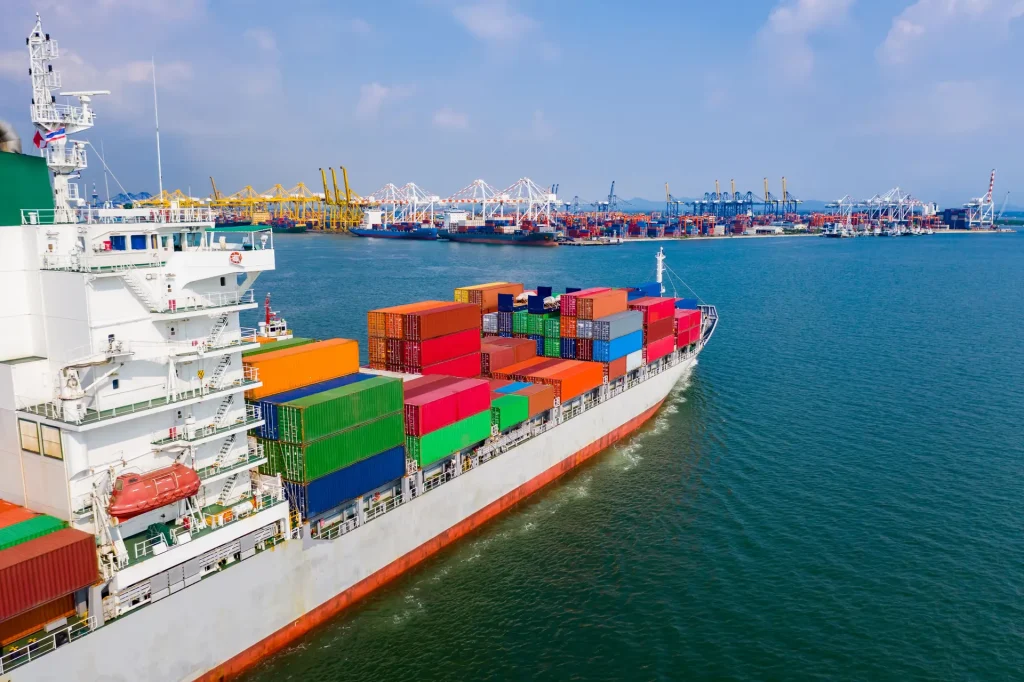
What is Sea Freight?
Sea freight, or ocean freight, is a method of shipping goods using ships. This method is suitable for transporting large quantities of cargo for export, import, and domestic shipments.
Compared to air freight, sea freight shipping is much more economical, especially for goods that do not require fast delivery.
In China, a major global manufacturing and trading hub, sea transportation plays a crucial role in the distribution of goods. For both domestic transportation and international trade, sea transportation is often the preferred mode due to its large capacity and lower costs compared to air transportation.
What are the types of sea freight?
There are several methods available for shipping goods by sea, or ocean freight, depending on the type and quantity of goods being shipped. Here are some commonly used methods:
1. Full Container Load (FCL)
If you have a large amount of goods that can fill a container, it's best to choose FCL (Full Container Load). This method ensures the container contains only your goods, making it safer and less likely to be mixed with other people's belongings. Furthermore, the loading and unloading process is faster than other methods.
2. Less than Container Load (LCL)
If the items you're shipping aren't large enough to fill a full container, you can use LCL (Less Than Container Load). With this method, your items will be combined with those from other shippers in one container.
The cost is cheaper than FCL, but usually the delivery time is longer because you have to wait for the container to be full before sending it.
3. Break Bulk Shipping
For large items that are too small to fit into a container, such as heavy machinery, construction equipment, or industrial materials (e.g., steel and logs), you can choose the break bulk shipping method.
These items are usually shipped separately and require special equipment such as cranes for loading and unloading.
4. Roll-on/Roll-off (RoRo)
For those of you who want to send vehicles such as cars, trucks, or heavy equipment, you can use the RoRo (Roll-on/Roll-off) method.
This allows vehicles to be rolled directly onto and off the ship without needing to be moved into containers. This method is commonly used in the automotive industry for large-scale car shipments.
5. Liquid Bulk Shipping
This method specifically applies to liquid goods, such as crude oil, fuel, liquefied natural gas (LNG), or chemical products. Shipments are made using specialized tankers equipped with high-security storage and security systems to prevent leaks or contamination.
What are the Types of Containers in Sea Freight?
The containers used in sea freight shipping also vary according to the type of goods being shipped:
Dry Container
Dry containers are the most common type of container used in ocean freight. They are designed to transport a wide variety of dry goods, such as clothing, electronics, furniture, and other industrial products.
High Cube Container
High cube containers are similar to dry containers but have an additional 30 cm of height. These containers are suitable for items that require more vertical space, such as large machinery or equipment that doesn't fit in standard containers.
Reefer Container
For goods that require specific temperatures during shipping, such as frozen food, dairy products, fruit, and pharmaceuticals, reefer containers, or refrigerated containers, are used. These containers are equipped with a cooling system that can adjust the temperature as needed to ensure the goods remain in optimal condition until they reach their destination.
Open Top Container
An open-top container is a container with a removable roof. This type is suitable for items that are too tall or have unusual shapes, such as large industrial machinery, logs, or construction equipment. Because it lacks a fixed roof, goods can be loaded and unloaded more easily using a crane.
Flat Rack Container
A flat rack container lacks side walls and a roof, making it suitable for large and heavy items, such as heavy equipment, large vehicles, and steel pipes. Because it's open on the side, items can be loaded from various directions, allowing for more flexibility in loading and unloading.
Tank Container
Tank containers are used for shipping liquids such as oil, chemicals, gas, or beverages in bulk. These containers are specially designed with stainless steel tanks inside to keep goods safe during transit.
How Does the Sea Freight Process Work?
Shipping goods using sea freight involves several stages:
- Booking and Scheduling: The shipper specifies the shipping details, including the type of goods, quantity, and containers required. The ship's schedule must also be adjusted to ensure timely delivery.
- Loading: Goods are packed and placed in suitable containers. Great care is taken to ensure the safety and protection of goods to prevent damage during transit.
- Shipping to Port: Containers are transported to the port by truck or train. This process must be well-scheduled to ensure the goods are not left behind by the ship.
- Process at the Port: Documents are checked, and goods are inspected before being loaded onto the ship. Documentation errors can cause delays.
- Shipping to the Destination Port: Ships carry containers along designated sea routes. The journey can take several days to several weeks.
- Destination Port & Delivery to Recipient: Goods are inspected again at the destination port before being transported to the recipient's location using land transportation.
What Factors Affect Sea Freight Costs?
Sea freight is the shipping of goods by sea, and costs can vary depending on several factors. The following factors influence sea freight costs:
- Delivery distance: The further the distance, the higher the cost.
- Type of goods: Dangerous goods or those requiring special treatment may be more expensive.
- Cargo size and weight: Large and heavy cargo requires higher costs.
- Types of containers used: Reefer containers or special containers are usually more expensive than standard dry containers.
- Customs fees and taxes: For import-export, taxes and customs fees affect the total cost.
The Role of Shipping in Determining Sea Freight Efficiency
Shipping plays a central role in determining the efficiency of shipping goods by sea freight. This efficiency is determined not only by distance and travel time, but also by:
- Shipping routes.
- Ship schedule.
- The type of ship used.
The more organized and connected a shipping route is, the faster and more cost-effective it can be. Therefore, choosing a shipping company with an extensive network and frequent deliveries can help optimize logistics time and costs.
Shipping also impacts efficiency through port facilities and connectivity between international ports. Large ports with modern infrastructure allow for faster loading and unloading processes and minimize the risk of delays.
On the other hand, ports that are congested or have limited shipping schedules can cause congestion and shipping delays.
The efficiency of sea freight depends heavily on how shipping can integrate all these elements smoothly.
When to Use Sea Freight?
If you are still unsure about when to use sea freight shipping, consider the following:
- You send goods in large quantities.
- There is no need for expedited delivery.
- Air freight costs are too expensive.
- Items that are difficult to ship by air.
Send goods more easily and economically with SSFESHIPPING
If you need to ship large quantities of goods at a more cost-effective price, sea freight is the right choice. However, it can be complicated, from booking and paperwork to tracking.
To save yourself the hassle, just use SSFESHIPPING! With a sophisticated digital system, you can book shipments, check the status of your goods in real time, and get instant quotes. No need to worry about paperwork yourself; everything is faster and more transparent.