
If you misunderstand shipping documents, you could end up paying more money or even getting into a legal dispute. If you’re moving goods by sea, truck, or rail, one term you’ll hear often is the bill of lading (BoL)—but what does it really mean, and why does it matter for your cargo?
This guide will teach you the basics of the bill of lading. It will explain what it is, why it’s important for your shipment, and the key terms you need to know. You’ll also learn how to create a BoL that keeps your goods moving and protects your interests if something goes wrong.
Understand the BoL – it’s essential for anyone shipping goods. If you’re new to logistics or looking to avoid common shipping risks, this is the course for you.
What is a bill of lading?
Missing details on a bill of lading (BoL) can cause shipment delays, disputes, or even loss of your cargo rights. The BoL—sometimes called an original bill of lading, B/L, or OB/L—is a legal document listing exactly what’s being shipped, how much, and to which destination.
It’s more than paperwork. The BoL serves as both a receipt for the shipper and a contract with the carrier. When your goods arrive, the consignee uses the BoL as proof of receipt.
A freight bill of lading outlines all shipment terms and contents, serving as a binding guide for how your goods are handled. Carriers depend on it to track cargo, schedule deliveries, and process invoices.
Why Is a Bill of Lading Important?
Shipping without a proper bill of lading exposes you to legal disputes, lost cargo claims, and confusion over ownership. The bill of lading (BoL) is essential for any land, sea, or air shipment, serving several critical roles:
- Valid Shipping Document: Proves your shipment is legitimate and authorized for transport.
- Proof of Receipt: Shows the carrier has accepted the goods from the shipper.
- Key Shipment Data: Lists shipment details—weight, quantity, destination, and parties involved—so everyone is clear on what’s being moved and where.
- Proof of Ownership: When signed, the BoL transfers ownership of goods to the receiver, protecting both buyer and seller.
- Contract of Carriage: Details the terms, conditions, route, and shipping costs, creating a binding agreement between shipper and carrier.
How to create a bill of lading
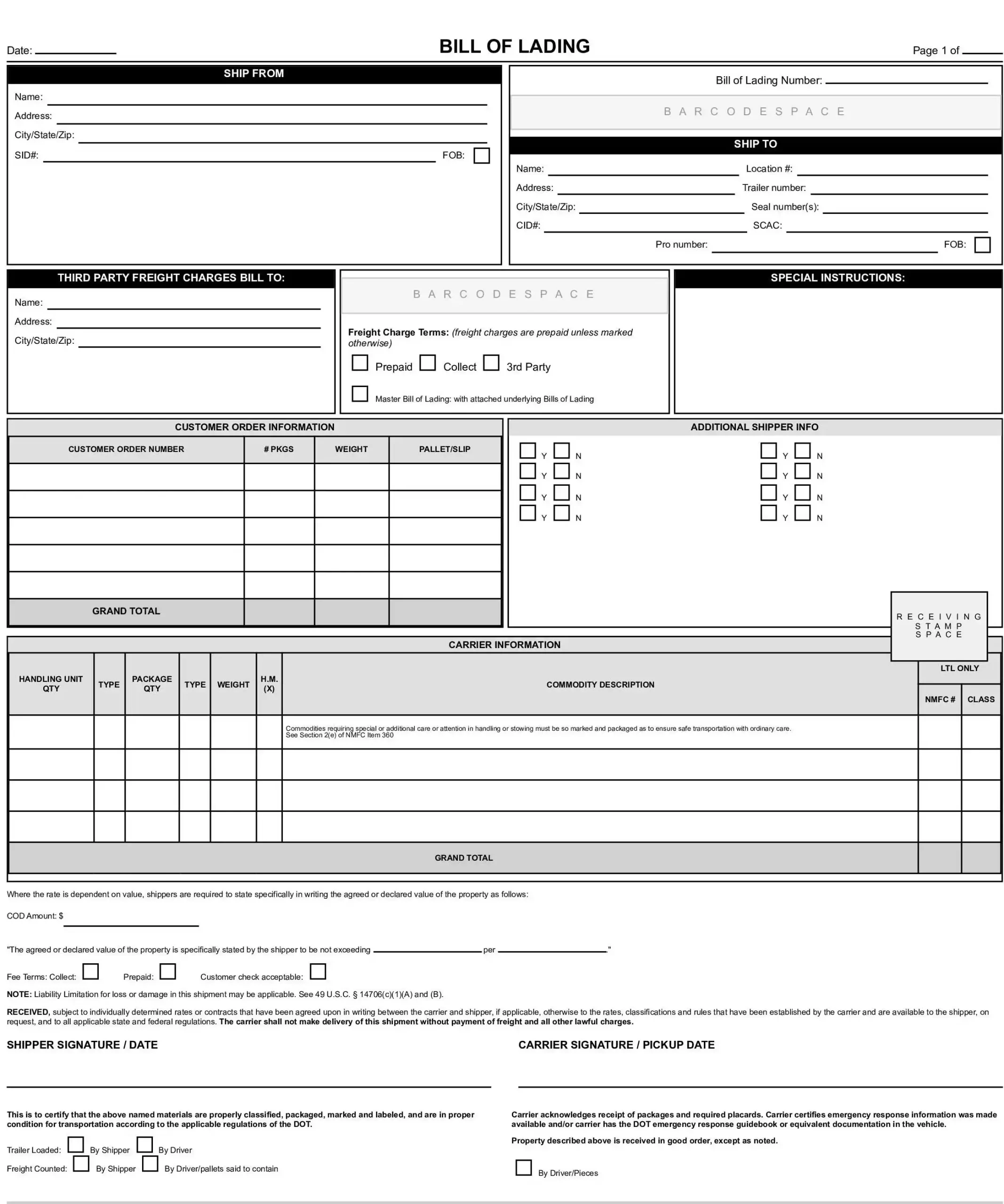
A bill of lading must include the following information:
- Shipper
- Consignee
- Mode of carriage
- Bill of lading number
- Booking number
- Number of packages
- Freight class and charges
- Collect
- Dated
Here is a sample of a bill of lading document:
Types of bill of lading
It’s critical to match the right document to your shipping needs. Here are the most common types you’ll encounter:
- Ocean Bill of Lading: Used when importing or exporting goods by sea. Issued by shipping lines, this document is essential for ocean freight shipments.
- Straight Bill of Lading: Cargo is consigned to and delivered only to the named party upon presentation of the Bill of Lading (BoL). Ownership cannot be transferred after issue. Ideal for full control and no title transfer risk.
- Order Bill of Lading: Also called a “to order” BoL, this version allows the consignee to endorse and transfer ownership rights to a third party (such as a bank or another buyer). It acts like a negotiable instrument—choose this if you may need to change ownership during transit.
- Air Waybill: Issued by airlines for air freight shipments. It serves as the shipping contract and receipt, but does not transfer ownership of goods. Unlike ocean BoLs, it’s always non-negotiable.
How Do You Prepare a Bill of Lading?
- Gather Shipment Details: Gather all important details—names of the sender and receiver, description of the cargo, amounts, and any necessary codes (like NMFC).
- Fill out the Form: Carefully complete every part of the BoL. Being accurate is very important because errors can cause delays during shipping or problems with customs.
- Check and Sign: Look over all the information again. Both the sender and the carrier need to sign to agree on the terms.
- Share Copies: Give signed copies to the sender, carrier, and receiver. Keep one copy for yourself in case of any claims or checks.
You can get BoL forms straight from your carrier, freight forwarder, or trusted industry websites. Preparing the form carefully helps protect your shipment at every step.