Before you can start selling your products, you need to import the goods. If you’ve purchased your goods in Asia, one important question always arises.
How can I get my goods from my manufacturer in China to the various Amazon warehouses in usa as safely and cost-effectively as possible? Are there any special considerations I need to be aware of? What is the exact process, and how do I find a trustworthy logistics provider?
This article answers these questions and teaches you how to import your goods safely and easily into usa.
This way, you know exactly what to expect, understand the process, and are prepared. The different options will be presented, and you’ll also learn about the various Incoterms. You’ll receive a list of reputable logistics providers, all with extensive experience with Amazon FBA . Let’s get started with the shipping methods!
Amazon FBA Import Shipping Methods and Costs
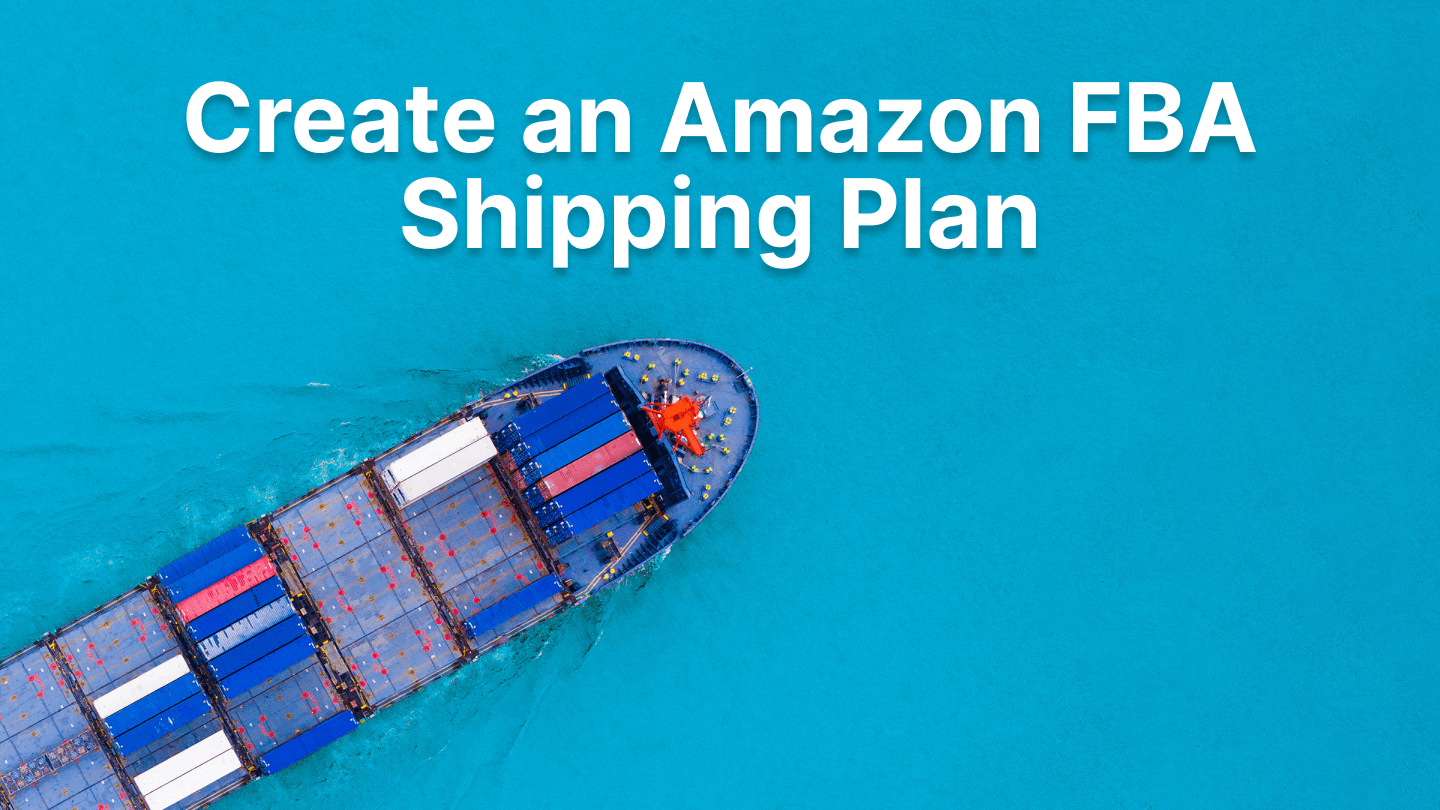
The most common shipping methods from Asia can be broken down into three options: import by ship, by train, or by plane. You should carefully consider this, as the choice has a decisive impact on your costs and your profit margin.
Importing by ship is generally the cheapest option and therefore the best in most cases. However, your goods will be at sea for approximately 30 days. Especially when reordering, you need to keep a close eye on your inventory to avoid running out of stock.
Tip: If time is running short or you want to launch early, you can also import part of your stock by plane. This way, you can start selling earlier while the rest of the goods are still en route by ship.
To give you a rough idea of the costs, here’s a real example: It involves shipping 20 boxes (50 x 50 x 50 cm) weighing 10 kg each. The goods are picked up in China and shipped to Germany.
- Air freight: Arrival after 5-8 days at a price of approximately $2,100
- Rail freight: Arrival after approximately 25 days at a price of approximately $1,000.
- Sea freight: Arrival after approximately 25-40 days at a price of approximately $800.
Of course, each logistics provider has different shipping times and prices. It’s important to get several current quotes to avoid wasting money.
Amazon FBA Import Incoterms
What exactly are Incoterms and why are they important? Incoterms is short for “International Commercial Terms.” Choosing an Incoterm establishes the rules and conditions between you and your manufacturer for the delivery and acceptance of your goods. Essentially, it defines who is responsible for your shipment and by when and where.
International trade uses a variety of Incoterms. For Amazon FBA imports, two are primarily used: EXW and FOB.
EXW
With EXW (Ex Works), your manufacturer produces the goods and then makes them available for collection at their company. Your logistics partner therefore has to travel to your manufacturer and pick up the goods there. The advantage of EXW is that the prices are usually somewhat lower directly from the manufacturer.
The problem is that you incur higher import costs because your logistics partner has to transport the goods to the manufacturer and then back to the destination port. Furthermore, the risk is transferred directly to you and your company at your manufacturer’s warehouse.
FOB
FOB is used by most Amazon sellers. Here, your manufacturer not only produces your goods but is also responsible for delivering them undamaged to the destination port.
If you agree on FOB Shanghai, for example, your supplier must transport the goods from their warehouse to the port in Shanghai. The major advantage here is that your manufacturer bears the responsibility and the risk until your goods have been loaded onto the ship.
FOB is also usually easier for your logistics provider, which is why you should choose FOB as the safest and simplest Incoterm to start with.
Amazon FBA Import: Process
Once you’ve chosen a suitable Incoterm, you can begin the import process. It might seem a little confusing at first, but with this clear guide, you’ll know exactly what steps to expect:
1. You request various logistics quotes and use this data to create your calculation. You can use the free FBA calculator from AMZ Ventures for this; more information can be found here: Amazon FBA Product Calculation
2. If your numbers are correct, you can place the bulk order.
3. You inform your manufacturer of the shipping marks (more on this later).
4. You book your logistics provider and send them your supplier’s contact details. They will then contact your manufacturer.
5. In the meantime, you can commission the quality inspection. You should do this before every order. You can find out what it entails and what to look out for here: Amazon FBA Quality Control
6. Send your logistics provider all necessary documents, such as the commercial invoice and the packing list. Also, complete the customs documents that your logistics provider sends you. This step is usually quick and easy.
7. Once your goods have arrived in Germany and cleared customs, you can then create your delivery plan in Seller Central.
Tip: Don’t send all your goods directly to Amazon. For large quantities, it can make sense to temporarily store some of your goods with a logistics provider and send them to Amazon later to save on storage fees .
8. Send the Amazon shipping labels to your logistics provider. Make sure each label is individually attached to the correct box. This is especially important if there are different quantities per box.
9. Your logistics provider will send you a confirmation when your goods have been shipped via a shipping service. DHL is a good option and highly recommended. You can create DHL labels directly in Seller Central. This article about Seller Central explains how.
10. Check daily whether your goods have been stored. If nothing has happened after two days, you should follow up with your logistics provider to make sure everything went smoothly.
Please note: If this is your first time sending in your goods, the storage process may take a little longer.
11. You did it: Your goods have been successfully stored (they are now available) and you can finally start selling your own products!
Amazon FBA Import Shipping Marks
Point 3 mentioned shipping marks. But what exactly are they?
Shipping marks are the details that your manufacturer should print on the shipping boxes. You can decide which information you want to include. The following are some suggestions:
- Company name
- Article number
- Product name
- Dimensions of the box
- Gross weight (including carton)
- Net weight (excluding carton)
- Barcodes (EAN codes)
- Product dimensions & color
The information printed on the boxes should simplify the process for your logistics partner to identify and differentiate them. Clearly printed information can speed up several processes and allow you to start selling sooner. This is especially important if you’re ordering different variations of the same item. If you can’t distinguish the boxes from the outside, the process will be slowed down.
Important: Don’t forget to provide your EORI number and customs tariff number. If your manufacturer is handling all shipping, this information, along with your mobile phone number, should be printed on the boxes. Manufacturers usually ship with TNT, which is perfectly suitable for smaller shipments. For larger imports, it’s best to use your own logistics provider. This way, you’ll always have a single point of contact and save money in the process.
Find Amazon FBA import logistics providers
When choosing your logistics provider, two things are particularly important: price and service. What good is the cheapest offer if the logistics provider is unreliable and you don’t have a competent contact person? Furthermore, your logistics provider should also be specialized in the processes for receiving goods at Amazon.
Always request quotes from several logistics providers to ensure you get the best offer. You can easily send your requests via email and usually receive a reasonable quote within a day, which you can then use for your calculations.
One last tip: There’s a time gap between placing your order and your product being stored at Amazon. You can use this time to prepare everything for your launch.