If you’re bringing products into the U.S., you need to know about (Harmonized Tariff Schedule) HTS codes. These codes affect the rules and costs for your imports, so it’s important to get them right. This guide will tell you what HTS and HS Codes are, how to find the right ones for your products, and give you tips to avoid common mistakes.
Many importers and exporters find it hard to choose the right HTS Code. But it’s very important to choose the right code when sending things to the US. Your code can change the amount of duty you have to pay, the steps you have to take, and whether your goods get through customs quickly or slowly.
Find out how HTS Codes work, what makes them different from HS Codes, and get practical advice on how to find the right code. Learn how choosing the right HTS Code can help you save money on customs duties and make sure your business follows U.S. rules.
What is an HS Code?
The (Harmonised System) HS Code is a number assigned to products to facilitate their classification for international trade. Created and managed by the World Customs Organization (WCO), it is used by more than 200 countries to keep customs duties, trade statistics, and legal rules consistent.
HS Code structure: How it works
HS Codes use six digits to categorise over 5,000 types of goods worldwide. Countries that use the Harmonized System follow the same coding rules. The full list of goods, their codes, and the rules for classifying them together form the HS Nomenclature and Coding System.
Some countries add extra digits to HS Codes, often making them 8 or more digits, to meet their own legal, tax, or reporting requirements.
For example, 7009.10 is the HS Code for automobile rear-view mirrors. In certain cases, codes may exceed six digits to reflect regional regulations or variations.
What is an HTS Code?
In the US, an HTS Code is a number that is used to sort imported goods. HTS stands for Harmonized Tariff Schedule. It’s important to know the right customs duties, and these codes help sort products by what they are and how they will be used.
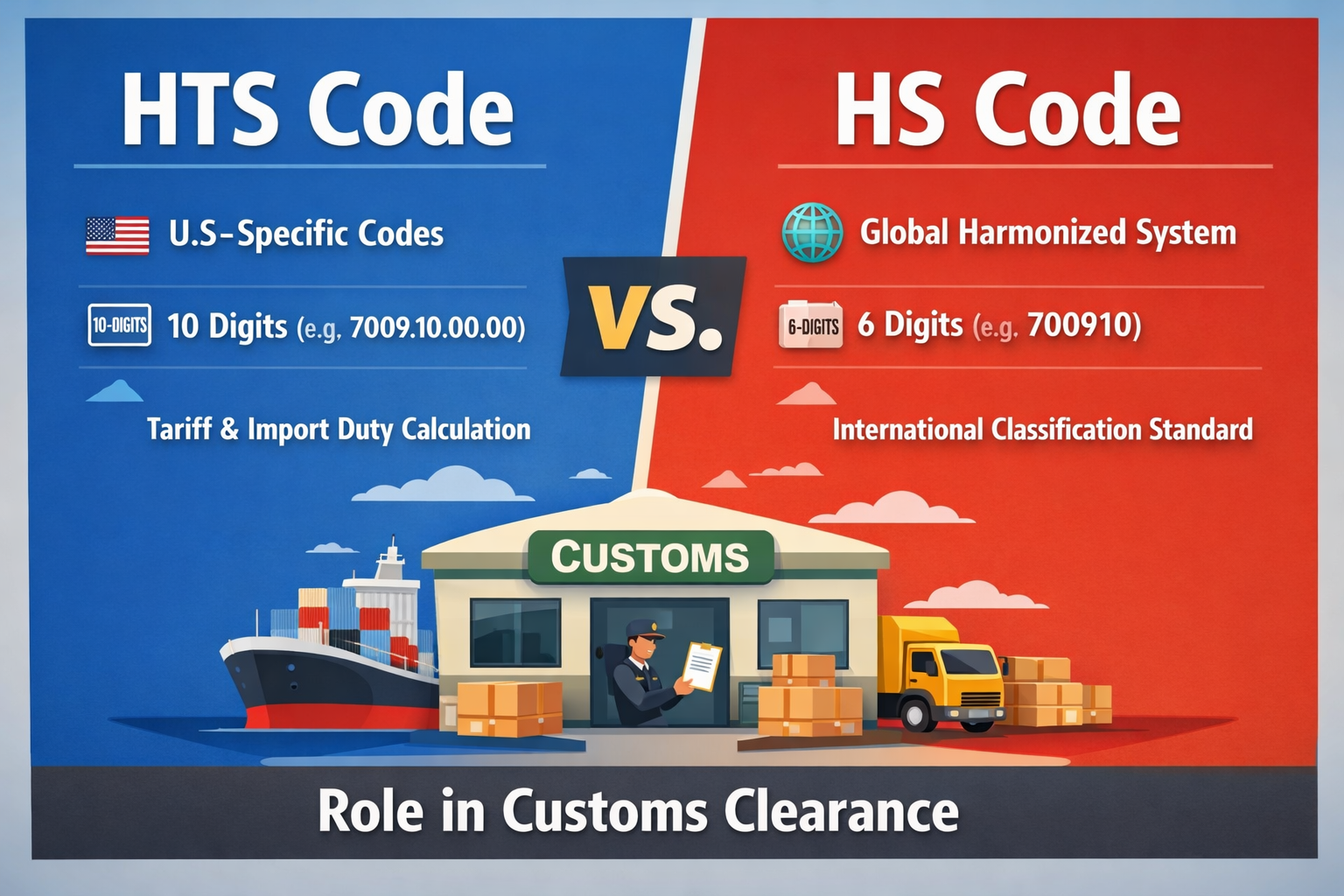
The U.S. HTS Code consists of 10 digits. The first six digits are derived from the international HS Code, while the last four digits are added to provide U.S.-specific subdivisions and statistical purposes.
For example, the first six digits on automobile rearview mirrors tell you what they are in the global HS system. The last four digits give more information about U.S. customs rules.
The table below explains what each number means.
| Digit Position | Description | Example (Car rear-view mirrors: 7009.10.00.00) |
|---|---|---|
| First 6 digits | HS Code (internationally standardized) | 7009.10 (Tents, of synthetic fibers) |
| 7th–8th digits | U.S.-specific subheading | 00 (Unclassified Subcategor) |
| 9th–10th digits | Administrative and statistical suffix | 00 (Specific use / statistical purpose) |
Differences Between HTS and HS Codes
The World Customs Organization (WCO) set up HS Codes, which stand for “Harmonized System.” These codes are used around the world to classify goods. It uses six-digit codes to sort goods entering and leaving a country.
HTS Codes, on the other hand, are based on HS Codes but have extra codes that are only used in the United States. Here is a summary of the differences:
| Feature | HS Code | HTS Code |
|---|---|---|
| Scope of use | Global | United States |
| Number of digits | 6 digits | 8–10 digits |
| Basis of classification | International standard classification | U.S.-specific classification |
| When used | Used when filing export declarations in countries worldwide | Used when filing import declarations into the United States |
The Importance of HTS Codes
HTS Codes are more than just classification numbers. They have many important uses in the import business into the U.S. Let’s look at how useful they are in practice, including how tariffs are calculated and how customs is cleared.
Customs duty calculation
HTS Codes are used to determine the amount of customs duty when importing goods into the U.S. Items are classified by code, and a set tax rate is applied to each.
For example, even if you simply refer to “clothing,” the classification code varies depending on the material and use, and the tariff rate fluctuates accordingly. If you use the wrong code, you risk paying higher tariffs than you should, or conversely, being deemed to have under-declared your goods and being subject to additional tax.
In the United States, this classification is strictly controlled, and customs inspections are very strict. Checking and applying the correct code is essential to avoid any issues.
Customs Clearance
U.S. Customs uses the HTS Code to inspect and classify imported goods. If the code is accurate, customs clearance will proceed smoothly, but if the code is incorrect, additional documentation or inspection may be required.
In particular, in cross-border e-commerce, many shipments contain multiple products in small quantities, making it necessary to assign the appropriate HTS Code to each item. If the classification is incorrect, customs may not be able to understand the contents, which could lead to delays in customs clearance.
Assigning the correct code to each item ensures smooth customs clearance and prevents delays in shipping.
Regulatory Check
HTS Codes are also used to determine whether an item is subject to import restrictions in the U.S. Certain items may require import licenses based on safety or environmental regulations, and the HTS Code can be used to check whether the relevant rules apply.
For example, foods and medical devices may require inspection by the FDA (U.S. Food and Drug Administration), and this can be checked efficiently using HTS Codes. By knowing in advance which regulations a product falls under and completing the necessary applications and registrations, you can avoid the risk of import refusals or delays.
Collection and Analysis of Trade Statistics
The U.S. government uses HTS Codes to collect, sort, and study information about imports. Every item has its own code, which makes it easy to keep track of important details like the amount brought in, the customs value, and the country of origin. Many people can access this information, so businesses that sell goods online across borders may be able to find it easily.
For example, if the number of a certain product coming into the country suddenly goes up, it could mean that demand is going up or that the market is changing. You can also use HTS-based trade data to decide what to sell, how much to charge, and when to make your sales. HTS Codes are useful for more than just getting through customs. They can also help you do market research and make smart business decisions.
Consequences of Incorrect Classification
- Inaccurate Duty and Tax Calculations: Customs duties and import taxes are based on tariff classification. You could pay too little or too much if you use the wrong code. If you don’t pay enough, you could face enforcement actions and extra fees. If you do pay too much, your costs go up.
- Fines and Monetary Penalties: Misclassifying goods can lead to big fines from U.S. Customs and Border Protection (CBP). Fines could be two to four times the value of the goods if there was negligence or fraud. Deliberate lying has even worse effects.
- Delayed Cargo Release: Mistakes in classification often result in customs holds or additional inspections. CBP might want to reclassify or request additional paperwork, which could slow clearance and lead to storage fees, demurrage, and supply chain issues.
- Loss of Preferential Tariff Treatment: Trade deals like the USMCA lower or eliminate duties on some goods. If you use the wrong HS or HTS Code, your shipment may not qualify for these benefits, which could result in higher duties and even back payments.
- Regulatory and Licensing Compliance Issues: Tariff classification also indicates whether a product requires FDA or USDA permission or an import license. If you get the classification wrong, you might not see these rules, which could mean that your shipment is held, denied entry, or enforced.
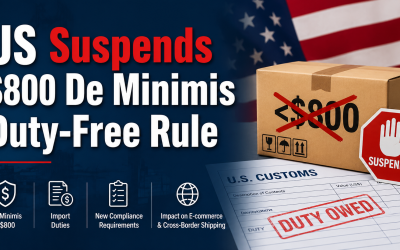
In August 2025, the United States will eliminate the de minimis threshold. This means that all goods imported into the country, including those worth less than $800, will be subject to taxation. Businesses will now have to adhere to the rules more closely, as every shipment will have to pay customs duties and taxes and obtain clearance.
If HTS Codes are not entered correctly on invoices or customs documents, you may end up paying too much duty, having your goods held up at customs or even having them refused entry. Therefore, you need to be careful when entering these codes.
To help you comply with the current rules and make these changes easier, Sfshipment offers DDP (Delivered Duty Paid) services for shipments to the US. We invite you to work with us to ensure your goods are shipped safely and easily in the ever-changing U.S. export market.