Key Points Summary
- A Bill of Lading (B/L) is a crucial document in international shipping that confirms the transfer of goods from the seller to the buyer.
- This legally binding document is used for customs clearance and receiving goods at the destination port or warehouse.
- Importing goods from China requires understanding different types of Bills of Lading and other import documentation to prevent issues during transit.
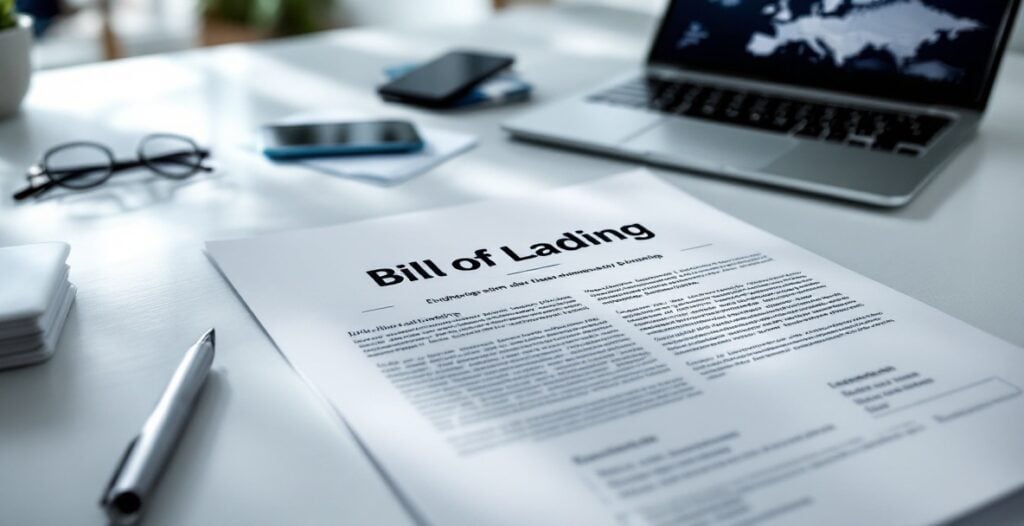
A bill of lading is a transport document used in logistics. It is a very important record that contains all the information about a shipment, including details about the shipper, the recipient, and the person who needs to be notified. A bill of lading is a contract for the transportation of goods from the loading point to the destination. It is issued by the shipping company to the exporting company after the goods have been loaded. The carrier prepares at least three copies: one for the sender, one for the recipient, and one for the carrier to keep. If more than one copy is made, each one is called a “copy bill of lading”.
A bill of lading is a document that a carrier gives to the shipper. It tells them what the goods being transported are, how many there are, and where they are going. It makes sure that cargo is delivered correctly and is the most important document for all types of transport.
The bill of lading is a document that gives information about the goods that are put on the ship and sent to the person or company that is buying them. It also includes the name and address of the person or company buying them, along with other information about the shipment. It allows the person receiving the goods to collect them upon arrival, which underscores the importance of the document.
Functions of the Bill of Lading (B/L)
The importance and functions of the Bill of Lading are as follows:
- Contractual Instrument: It stipulates the terms and conditions of the transportation contract from the port of origin to the port of destination, ensuring delivery of the goods to the importer as specified in the document.
- Receipt: It serves as proof that the carrier has received the goods for shipment and details the quantity and specifications of the cargo.
- Proof of Title to Goods: To prove its authenticity and confirm the consignee’s rights, the original Bill of Lading must be shown to the shipping company. The Bill of Lading also allows goods to be transferred to someone else. If the original document is not provided, the shipping company will not release the goods. This helps prevent fraud and protects the exporter if the importer has not paid, since the exporter can keep the Bill of Lading until payment is made.
What information does a Bill of Lading contain?
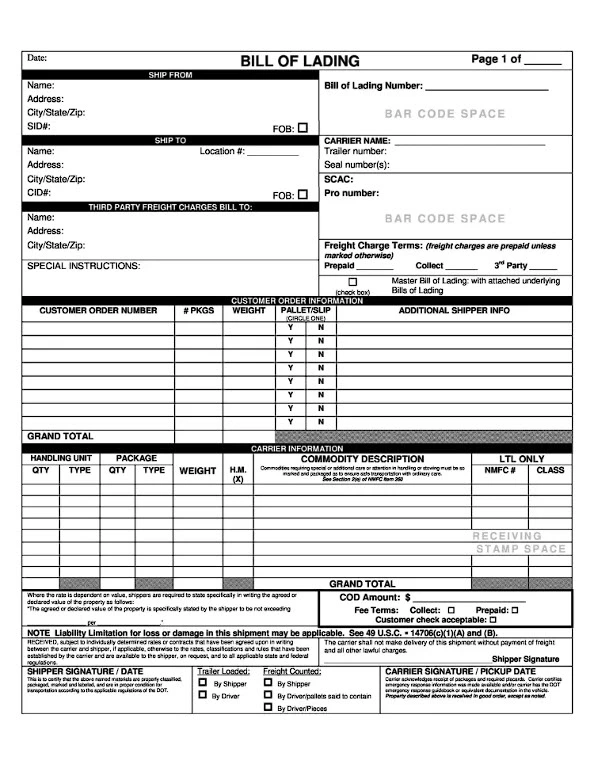
There is no standard template for a bill of lading; each company drafts it according to its own circumstances. However, typically, each bill of lading contains the following information:
- Vessel name;
- Port of loading and discharge;
- Date and place of issuance;
- Full name and contact details of the shipper or company;
- Complete details of the consignee or receiving entity;
- Detailed description of the goods’ type, nature, quantity, and condition; may include weight, volume, number of pieces, and packaging;
- Markings and numbers of containers/stations: If goods are loaded in containers or separate stations, their markings and identification numbers must be specified;
- Terms of carriage, such as payment method, delivery time, and responsibilities of each party;
- Signatures of both parties: The captain or authorized representative of the carrier signs to confirm the goods have been loaded; the shipper’s signature may also be required.
- A unique number on the bill of lading for identifying the document;
- Cargo insurance details;
Who issues the bill of lading?
The bill of lading is issued by the shipping company. The exporter must complete the relevant information before sending this document to the importer for analysis and approval of the entered data.
Typically, the bill of lading is signed by the captain. If the captain does not sign personally, an authorized representative must sign in a clear and unambiguous manner.
It is worth noting that a negotiable bill of lading is one endorsed to a third party, not necessarily the owner of the goods. This third party will handle all customs clearance procedures.
This is a unilateral document, and the signature is crucial because it transfers responsibility for the goods: once it is signed, liability for the cargo passes to the carrier.
But why does this occur? If the goods arrive damaged, the carrier must note it on the document. By explicitly stating this, they ensure the damage is not their responsibility, as the goods were already in that condition upon arrival.
What is the “Carrier” in the Bill of Lading?
The “Carrier” is the party that actually transports the cargo. It is the entity that operates the ship, plane, train, or truck. In the Bill of Lading, the name and details of the carrier are clearly indicated, as it is the carrier that assumes the obligation to deliver the goods to their destination.
- In ocean shipping: The carrier is the shipping company, such as Maersk, MSC, COSCO, Hapag-Lloyd, etc.
- In air shipping: The carrier is the airline, such as LATAM Cargo, Lufthansa Cargo, Emirates SkyCargo, etc.
- In road/rail shipping: The carrier is the road/rail transport company that operates the vehicles.
It is essential not to confuse the carrier with the freight forwarder. The freight forwarder is an intermediary who organizes the transport, negotiates with the carriers, and issues the House Bill of Lading (HBL) or House Air Waybill (HAWB). However, the “carrier” on the Master Bill of Lading (MBL) or Master Air Waybill (MAWB) is always the company that operates the means of transport.
Bill of Lading Sample
Risks of Inaccurate or Missing Bills of Lading
If your bill of lading is missing information, not signed, or has mistakes, your cargo might not get to its destination. This could also make you more accountable.
A Bill of Lading (BOL) is proof that your goods were shipped safely and in good condition. If your customer gets damaged goods, they can take the carrier to court. But you might not get all of your money back if your BOL has mistakes or missing information and there is no clear record of when the damage happened. You could also be at risk of these things:
- Delivery Delays: Your cargo may not arrive on time if there are mistakes or missing information.
- Extra Costs: Mistakes can lead to extra costs, like detention, demurrage, or amendment fees.
- Legal Risks: If bills of lading are wrong, it can be harder to enforce contracts and claims.
- Customs Problems: If your documents are not the same or have mistakes, customs may hold up your shipment or fine you.
Summary
Now that we have explored what bill of lading are and how they work, their vital role in the logistics chain is clear. These documents give everyone involved in the shipping process peace of mind, are clear and easy to understand, and provide a reliable record at every step of the journey. If you understand their importance, you can work with them easily and clearly divide their responsibilities.
You should now have a better understanding of this document. This knowledge is essential for any shipping transaction. You are now ready to start sending, handling or receiving goods.