If your business exports goods to the US, you must comply with the ISF process. However, many companies do not fully understand how this process works. This article will explain what the ISF is and provide the information you need when filling out an ISF declaration. Shipping Logistics can help you with everything related to the ISF declaration. We will provide you with all the information you need to complete the declaration with confidence and ease.
What is ISF?
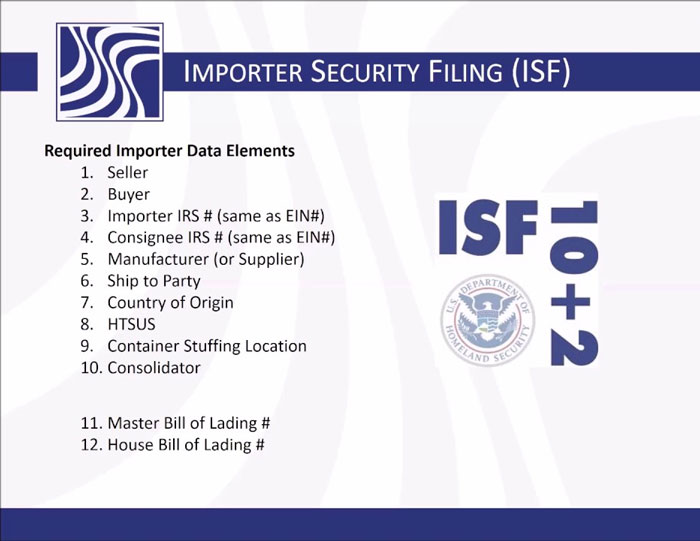
Also known as the ’10+2 Rule’, it requires importers to provide detailed cargo information before goods are loaded onto vessels departing from the exporting country. This regulation enables the U.S. government to obtain more information and time to inspect, verify and assess the risk level of imported goods.
The information required under the ISF includes details of the exporter, consignee and carrier, as well as a description of the goods and shipping and packaging information. The ISF declaration process requires accurate, timely information.
What information is required for ISF filing?
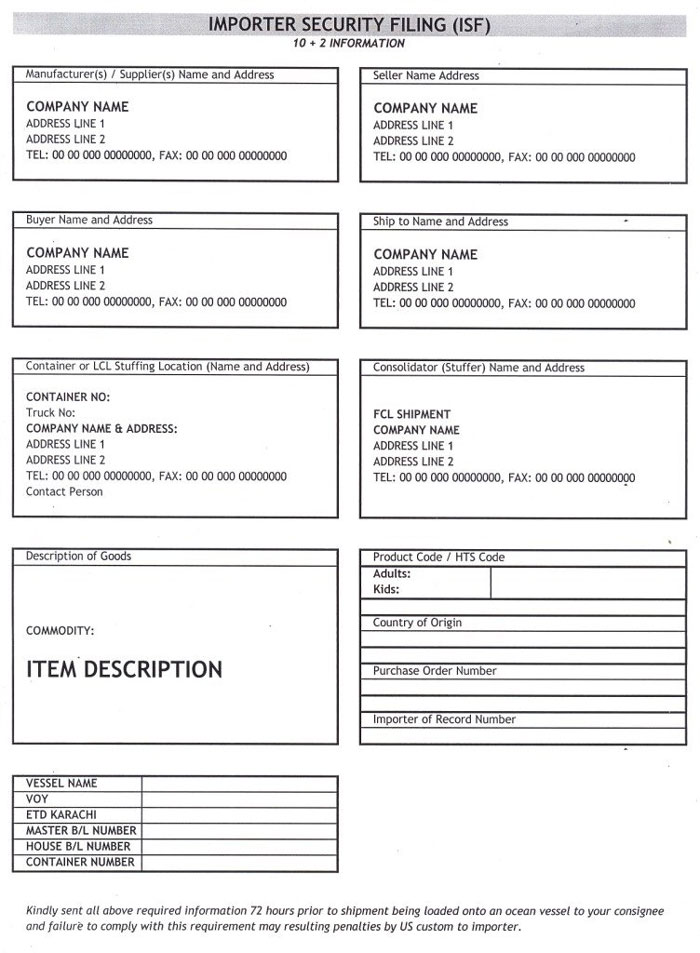
Before you can export goods to the United States, you must prepare the information needed for ISF filing. If goods are going to be imported into an export processing zone or sent by a freight forwarder, eight pieces of information must be provided at least 24 hours before the goods are sent. Here is the information you need for ISF filing:
- Seller name and address
- Buyer name and address
- Recorded importer number/bonded zone applicant identification number
- Consignee number
- Manufacturer or supplier.
- Consignee.
- Country of origin.
- Goods’ HS code according to the Harmonized Tariff Schedule of the United States (HTSUS).
- Container loading location.
- Freight forwarder.
Who Is Responsible for ISF Filing?
The Importer of Record (IOR) is mainly responsible for filing the Importer Security Filing (ISF). This is the person or company that owns or controls the imported goods and must follow U.S. Customs and Border Protection (CBP) rules. Usually, the Importer of Record is the buyer or their agent.
Importers are legally responsible, but they often ask a trusted customs broker or freight forwarder to submit the Import Security Filing for them. However, importers are still responsible for any mistakes, missing details, or late filings.
ISF Filing Steps
The steps that are usually part of the ISF filing process are as follows:
- Gathering information: The importer works with the seller and the freight forwarder to get all the information needed for the filing.
- Filing through the CBP system: Use ISF filing software or a customs broker to send the information to the U.S. Customs system.
- Verification and editing (if necessary): Before sending in the information, carefully check it for mistakes and fix them to make sure it is correct.
- Monitor filing status: Make sure that U.S. Customs and Border Protection has received the information and hasn’t asked for any more.
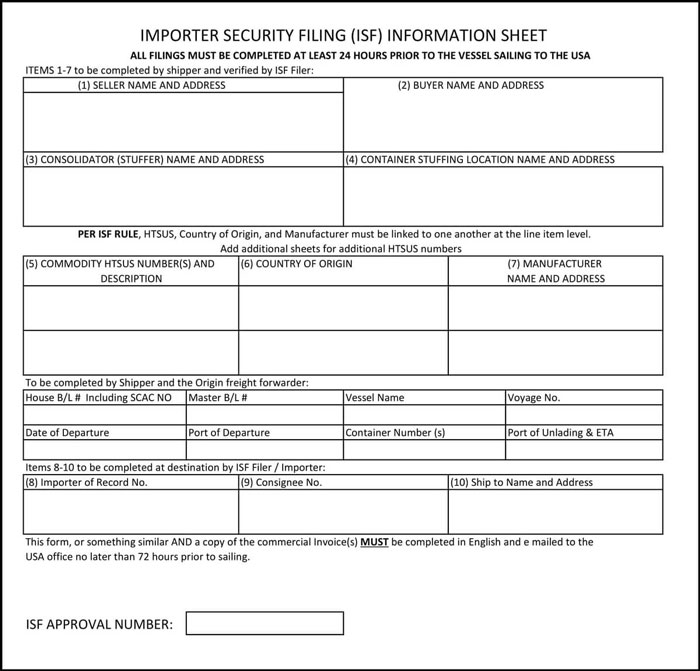
ISF Application Form Example
Common Errors When Filing ISF
The United States is one of the countries with extremely stringent security measures, so all goods intended for import into the U.S. must undergo rigorous inspection. However, some businesses still make mistakes when implementing the U.S. Import Security Filing (ISF) procedure. Common errors include:
- Late AMS Filing: If the goods haven’t reached the transshipment port and thereis an error in the late AMS filing, the goods can’t be loaded for export to the US. Companies should check the shipping agent’s vessel schedule to avoid this.
- AMS Correction: This mistake occurs when the actual number of items shipped differs from the number stated in the original AMS, or when the consignee information is incorrect. In this case, the freight forwarder has to send in the AMS again and pay a $40 fee to fix it.
- Late ISF Filing: If the ISF declaration is submitted late, importers may have to pay up to $5,000 per shipment.
- Cargo Held for Container Inspection (X-ray): The cost of inspecting a 40-foot container is usually between $200 and $300, plus storage at the port. The exact costs depend on the terms of trade, such as FOB or CIF, and both exporters and importers may have to pay them.
Summary
ISF10+2 is the main process for bringing goods into the United States. Completing these steps accurately and on time helps make the import process smooth and efficient.
Because the process can be complex and requires accurate information, working with a freight forwarder is a good option. They can help make things easier for importers and offer expert support.