
What is DDP shipping?
DDP (Delivered Duty Paid) is one of the most comprehensive delivery terms in the Incoterms. It represents the seller’s most significant commitment. Under this term, the seller assumes all responsibilities and costs associated with transporting the goods, including import duties, taxes, and other charges, until the goods are delivered in full to the location agreed upon with the buyer. At this point, the seller is deemed to have fulfilled their obligations.
If the seller cannot obtain the necessary authorizations or permits for import clearance, it is advisable not to use this term.
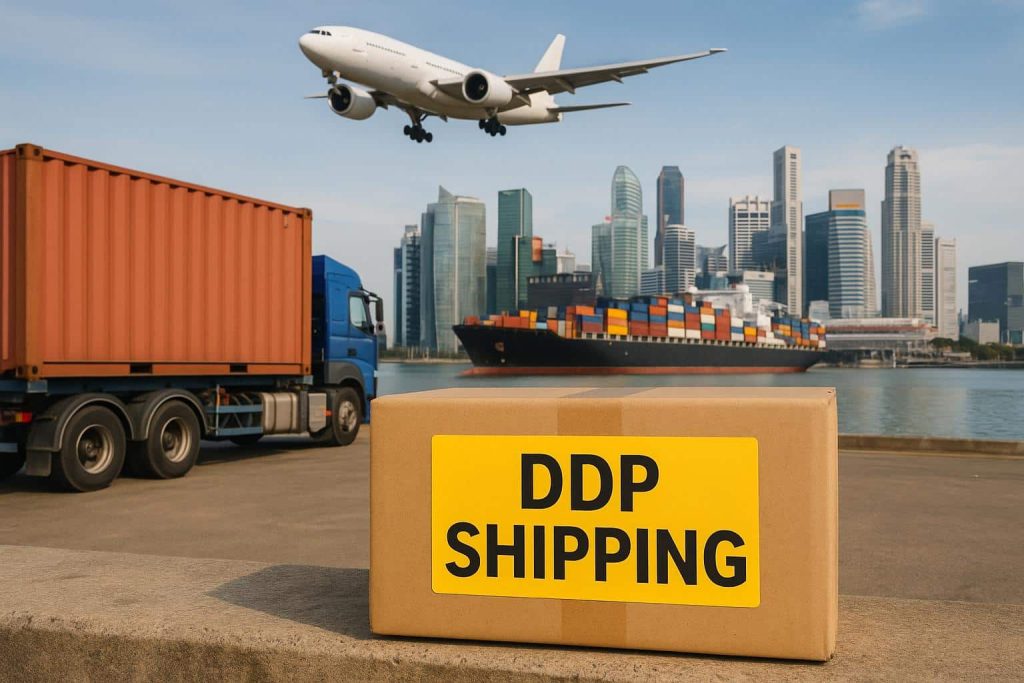
What does DDP shipping include?
Under the Incoterms DDP, the seller assumes full responsibility for transportation, delivering the goods to the agreed location (such as the buyer’s factory or warehouse) and bearing all related costs, including:
- Domestic transportation within the country of origin: From the seller’s warehouse to the place of shipment.
- Origin Goods Clearance: issuing the necessary documents for the export of the goods from the seller’s country.
- International shipping: costs of delivering the goods.
- Delivery costs: costs and fees associated with the arrival of the goods in the destination country, such as unloading and clearance.
- Destination Clearance: issuance of the necessary documents for importing the goods into the buyer’s country.
- Payment of taxes: taxes and fees incurred for importing goods.
- Transportation within the destination country: from the arrival point to the location agreed with the buyer.
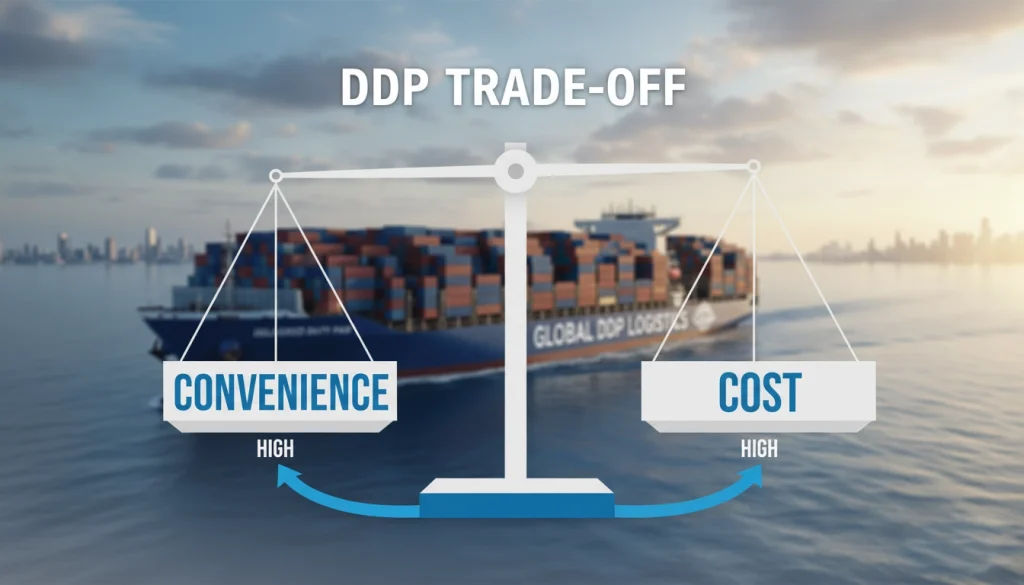
Overall, the DDP (Delivered Duty Paid) trade term offers buyers maximum convenience, as they do not have to worry about any transit issues. The seller is responsible for everything from the point of origin to the final destination and guarantees that the goods can be used immediately upon arrival.
DDP Agreement: Buyers and Sellers Responsibilities
In DDP shipments, the seller bears the majority of responsibilities. The buyer’s obligations are minimal, as the seller is responsible for most of the process.
Seller’s Responsibilities:
- Delivery of goods: The seller is obliged to ensure delivery of the goods to the location agreed with the buyer.
- Pay all costs: including transport charges, import duties, taxes, and any other costs, before the goods arrive at the specified location.
- Packaging: The seller must properly package the goods to protect them from damage during transport.
- Customs clearance: The seller is responsible for all customs procedures in the country of origin and the country of destination.
- Risk: Until the goods are delivered to the agreed location, all risks associated with transportation and delivery are borne by the seller.
- Documents: The seller is obliged to provide the buyer with all necessary documents of receipt, such as commercial invoices, bills of lading, and any other related documents.
Buyer’s Responsibilities
- Payment for Goods: The buyer must ensure payment for the goods is made in accordance with the method specified in the contract or pro forma invoice.
- Receipt: Once the goods have been delivered to the address, the buyer is responsible for accepting, unpacking, and carefully inspecting them to ensure that everything is in order.
- Notification of defects or discrepancies: If there are any problems with the goods, the buyer shall notify the seller within the agreed time frame.
Advantages of Using DDP
As one of the most comprehensive trade terms, DDP offers numerous benefits to both buyers and sellers. However, these advantages largely depend on the nature of the transaction and the capabilities and preferences of the parties involved.
Advantages for the buyer
- Simplicity of management: buyers do not have to worry about customs procedures or import costs and can focus on other aspects of their business.
- Cost predictability: the agreed price includes all costs up to delivery, avoiding unexpected surprises such as additional charges.
- Reduced risk: the seller assumes all risks related to transport and delivery until the goods arrive at their destination.
- Ease of planning: by knowing the delivery date and location in advance, buyers can better plan their internal operations.
Advantages for sellers
- Control logistics: By managing the entire transportation process, sellers can choose the supplier that best meets their needs and negotiate preferential rates.
- Competitive positioning: Offering DDP terms can be a competitive advantage, especially for buyers seeking turnkey solutions.
- Process optimization: By familiarizing themselves with export procedures and regulations, sellers can simplify and standardize their operations.
- Strengthened business relationships: By assuming most of the responsibility, sellers can build buyer confidence and establish a long-term business relationship.
How to calculate DDP costs?
DDP (Delivery Duty Paid) costs include all costs from the place of shipment to final delivery, including taxes and customs duties. It is important for the seller to calculate this price correctly to provide an accurate and economical quote, and for the buyer to avoid hidden costs during the transaction.
To calculate the final DDP price, the seller must add up all logistics and tax costs until final delivery.
The basic formula is:
DDP Price = EXW Price + Freight (Origin + International Transport + Destination) + Insurance + Export Costs + Duties and Taxes + Customs Clearance Fees
When do DDP Incoterms apply?
The provisions of DDP Incoterms apply in the following situations:
- Reduced transportation process: When importers lack experience in international logistics or do not wish to deal with complex transportation issues, DDP terminology may be ideal.
- Fast and secure delivery: DDP offers the seller a high degree of control, which helps to ensure fast and secure delivery of goods.
- High-value goods: For importers of high-value goods (such as industrial equipment, electronic equipment, or jewelry), DDP Incoterms may be the ideal solution.
In such circumstances, the value of the goods sufficiently offsets the additional costs associated with accepting terms like DDP, as the seller remains responsible for the goods throughout the entire transportation process. Should the goods be damaged or lost during transit, this clause safeguards the importer from financial loss.
Important Notes on DDP Shipments
- Cost: For importers, DDP is generally the most expensive option, as the seller bears most of the costs.
- Control: The importer has virtually no control over the transportation process, as the seller is responsible for everything.
- Flexibility: DDP trade terms are not as flexible as other trade terms, as the seller is not required to deliver the goods to a specific location.