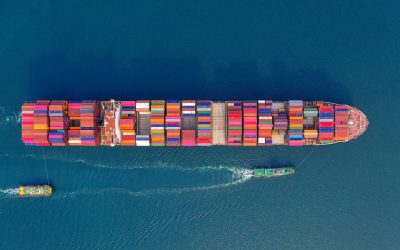
A 2022 study found that the largest container ports handle 86% of global maritime transport.
There are 360 ports in the United States, and the country plays a significant role in the global container shipping industry.
If you export goods to the United States, it is very important to know the country’s main ports, as working with the right ports can ensure that your cargo arrives safely and efficiently.
These ports are among the largest and busiest in the world and play a very important role in trade between the United States and China. Next, we will conduct a detailed analysis of the 10 major seaports operated in the United States:
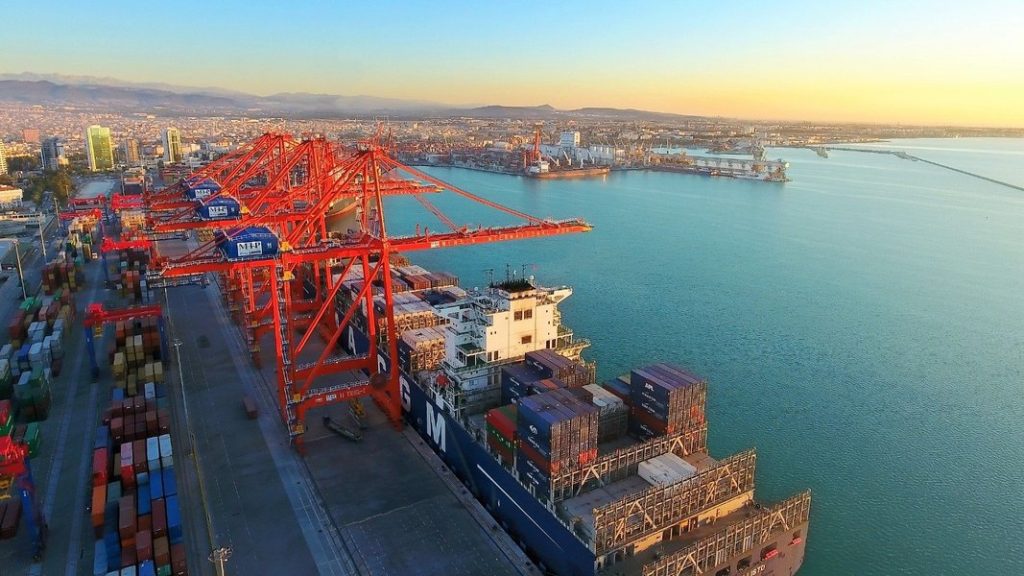
What are the most important cargo shipping ports in the USA?
Some of the most important ports in the United States are:
- Port of New York and New Jersey
- Port of Virginia
- Port of Long Beach
- Port of Los Angeles
- Port of Georgia
- Port of Seattle-Tacoma
- Port of Houston
Below, we share relevant information about these US ports.
1. Port of New York and New Jersey
The Port of New York and New Jersey, one of the entry and exit points for goods into the United States, is one of the world’s best natural ports in terms of tonnage, size, and operational efficiency.
It is one of the most important ports on the East Coast of the United States and a major transit point for international flights, as well as the busiest hub in terms of total passenger and cargo traffic. There are two free trade zones, one on each side of the port (New York/New Jersey).
The port services offered by this US port are as follows:
- Loading and unloading
- Electrical repairs
- Steam equipment
- Electrical equipment
- Navigation equipment
A recommendation regarding this port is that for relatively large quantities of goods, it is much more efficient to use a series of containers rather than transporting cargo on a ship.
2. Port of Virginia
Among other ports on the East Coast of the United States is the Port of Norfolk in Virginia. The Port of Virginia Authority’s operations are conducted by Virginia International Terminals, LLC (VIT), a single-member limited liability company wholly owned by the Port of Virginia Authority (VPA).
In 2019, Virginia was ranked as the number one state for business by CNBC, and the Port of Virginia plays a significant role in its capacity to serve these businesses. It is currently increasing its efforts to become the primary gateway port on the East Coast of the United States for world trade.
This port transports cargo from the United States to markets around the world and from these markets to the United States.
It has the capacity to handle more than 4,000,000 containers per year with ultra-large container ships, barge services, and rail transportation.
3. Port of Long Beach
Another major seaport operating in the United States is the Port of Long Beach, established in 1911. This port is the primary gateway for transpacific trade in the United States and a pioneer in innovative cargo transportation. It also stands out for its high security, environmental management, and sustainability features.
It is the second busiest container port in the United States, handling $170 billion worth of trade annually and providing employment to 2.6 million people nationwide.
Long Beach is one of the few ports in the United States that can accommodate today’s largest ships and serves 175 shipping companies with connections to 217 ports worldwide.
Currently, the Port of Long Beach is focused on becoming one of the most modern, efficient, and sustainable ports in the United States.
4. Port of Los Angeles
The Port of Los Angeles is one of the most important ports in the United States because it is the country’s main gateway for international trade and the busiest seaport in the Western Hemisphere.
Located in San Pedro Bay, California, the port covers an area of 7,500 acres along a 43-mile coastline. Handling various commodities ranging from avocados to zinc, the port features passenger and cargo terminals, cruise ships, containers, automobiles, break bulk cargo, dry and liquid cargo, and storage facilities.
Currently, this US port is focusing on new technologies to improve the flow of digital information throughout the supply chain. It has been ranked as the number one container port in the US every year since 2000.
5. Port of Georgia
One of the United States’ ports on the Atlantic Coast is the Port of Georgia, which has served as a magnet for international trade and investment since 1945. Georgia’s deepwater ports in Savannah and Brunswick, along with inland terminals in Chatsworth, Bainbridge, and Columbus, are critical conduits for raw materials and finished goods to and from destinations around the world.
The Port of Savannah, home to the largest single-terminal container facility of its kind in North America, consists of two deepwater terminals:
Garden City Terminal. The fourth busiest container handling facility in the United States. It covers more than 1,200 acres and moves millions of tons of containerized cargo annually.
Ocean Terminal. Dedicated to Savannah’s breakbulk and roll-on/roll-off cargo. It covers 200.4 acres and provides customers with more than 1.4 million square feet of covered, versatile storage.
The Port of Brunswick, meanwhile, consists of three deepwater terminals and is one of the fastest-growing ports in North America for the automotive and heavy machinery industries.
Currently, more than 12 major automakers use Colonel’s Island Terminal. It also hosts the fastest-growing bulk import and export operation on the South Atlantic.
6. Port of Seattle-Tacoma
- Smith Cove: This marine terminal is designed for access by trucks, cruise buses, and other commercial vehicles. It also has approximately 1,000 parking spaces for the tourism sector and other transportation programs near the cruise terminal in the area.
- Bell Street: On the other hand, the Bell Street marine terminal has an area of 1,600 m² and approximately 1,700 parking spaces. Located at 9 Wall Street, the terminal has a robust security and protection system.
7. Port of Houston
This US port holds a significant share due to its status as the busiest port in terms of tonnage arriving from abroad. Furthermore, the Port of Houston is the largest port on the Gulf Coast, making it a hub of intense commercial activity.
This port covers an area of 40 km, is 25 miles away, and is only a few hours away from the Gulf of Mexico. The importance of this US port lies in its role as a gateway to the US and as the port with the highest volume of foreign goods entering the country. This is due to its large size and capacity to handle export and import activities. The port is the fourth-largest in the United States and the second-largest in terms of cargo movement.
It is estimated that 20 international ships arrive at the Port of Houston every day. However, this port also has sea terminals suitable for much smaller ships, which means that approximately 200,000 small ships arrive at the port each year.
America’s Busiest Port’s Impact on the U.S
The busiest seaports are crucial to global commerce, driving national economies and international trade. Let’s explore the impact of the US busiest port’s pivotal role and impact on the maritime industry.
- Economic Impact
The Port of Los Angeles is one of the most important centres of commerce. Every year it processes millions of shipping containers which bring items such as electronics, apparel, and machinery into the United States. The Port is responsible for over 3M jobs in the whole of the US.
- Supply Chain
The port is an important element of the global production chain, which links the US with Asian and other markets. It deals with a wide variety of goods such as electronics, apparels, machinery and vehicles. The capacity of the Port of Los Angeles and its effectiveness in terms of costs, thus, guarantee the constant supply of goods across the territory.
- Infrastructure and Development
The port of Los Angeles has triggered a lot of investment in infrastructure. There are road and railway networks together with highways that have either been constructed or reconstructed to facilitate the operations of the port. These structures also serve not only for the benefit of the port but also for other industries and other people of the region.
- Environmental Considerations
The large ports have an environmental impact. The Port of Los Angeles is committed to the reduction of pollution and the preservation of the environment. Measures include switching to cleaner fuel, and increasing the efficiency of energy usage, as well as regular checking of air and water pollution.
- National Security
The port plays a role in national security. It is an important strategic center for the reception of military supplies and equipment. Also, the port works together with the government agencies in matters concerning safety of imported products and other requirements.